
The story
Historical context
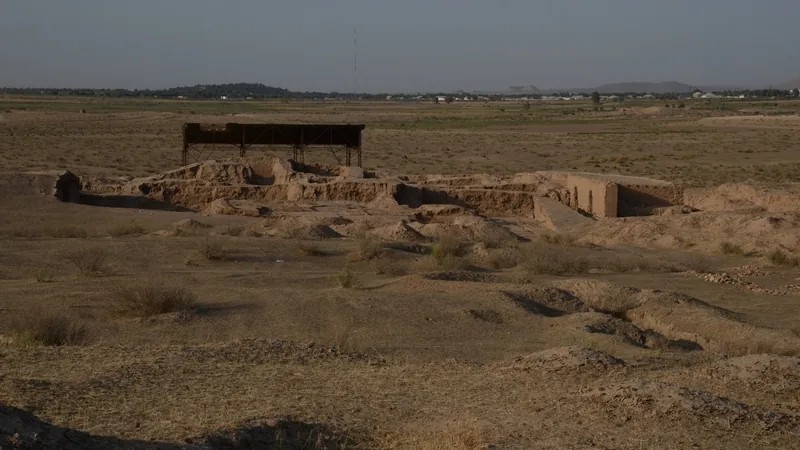
Kara Tepe developed as a group of Buddhist monastic complexes during the Kushan period. Archaeologists documented courtyards, halls, cells, stupas and spaces cut into the low hills.
Archaeological and architectural evidence
Inscriptions and artistic remains reflect a multilingual, connected religious community. The chronology is layered, and individual sectors were altered, reused and abandoned at different times.
Interpretation and uncertainty
Excavated surfaces are fragile and current visitor access is not guaranteed. Its proximity to a sensitive border zone makes current local confirmation essential rather than optional.
Visiting responsibly
Visit it conceptually with Fayaz Tepe and Zurmala, but retain each as an independent archaeological place: their plans, histories and surviving evidence are not interchangeable.
Why it matters
Visit Kara Tepe to understand a distinct layer of Termez and the wider Surkhandarya Region.
Highlights
- Historical context
- Archaeological and architectural evidence
- Interpretation and uncertainty
Gallery
Practical notes
Confirm current access with a reliable local contact. Expect exposed, uneven terrain and respect every barrier.
Suggested visit: 70 min.
Add this place to your Uzbekistan journey.
Save the places that interest you, arrange the order, then request transport directly in WhatsApp.