
The story
Historical context
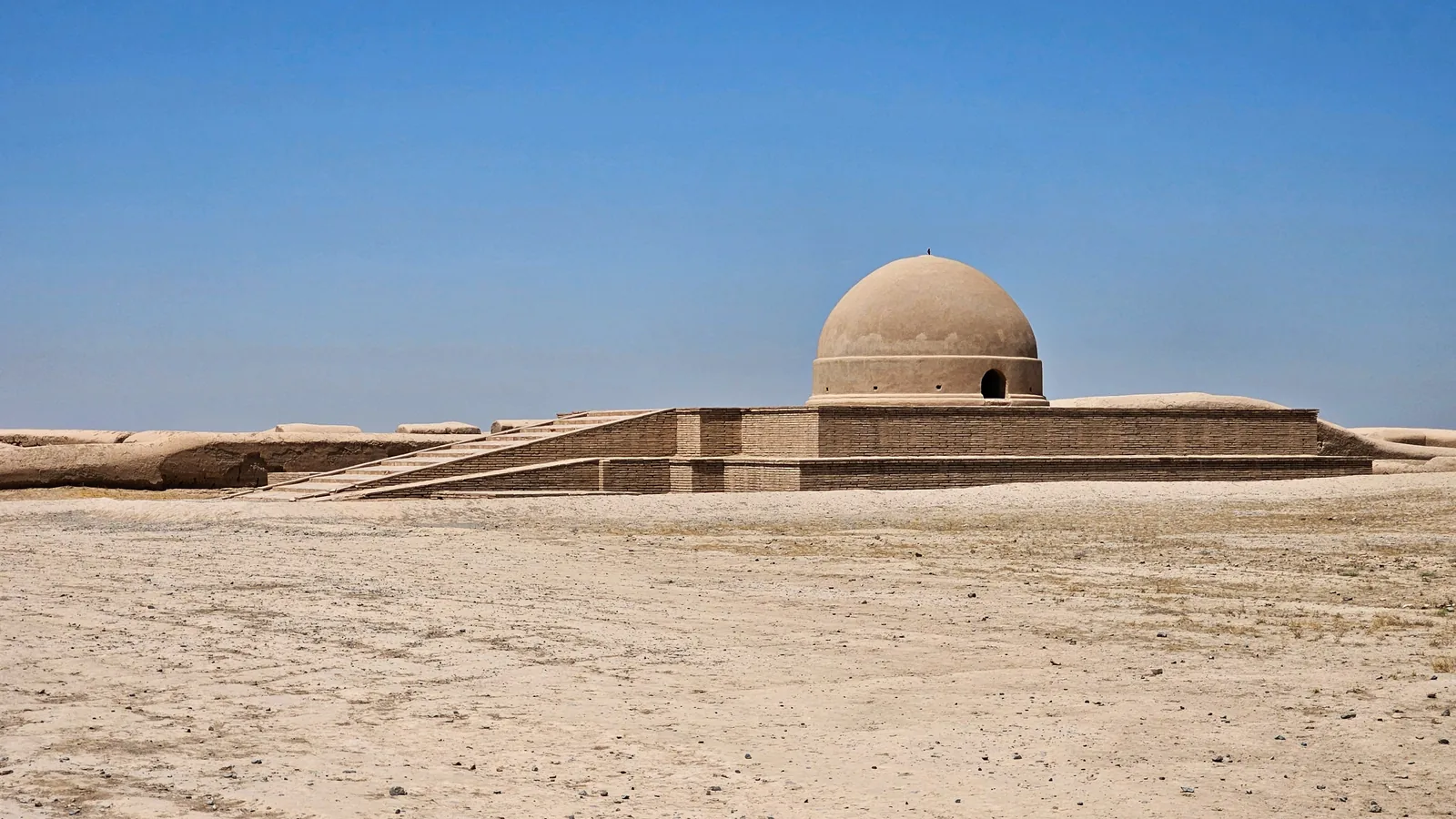
Fayaz Tepe was excavated in the twentieth century and preserves the plan of a Buddhist monastic complex with courtyards, cells, ritual spaces and a stupa. Evidence places its principal development in the Kushan period, with later change and abandonment.
Archaeological and architectural evidence
Sculpture, wall painting and inscriptions recovered by archaeologists show links across the Buddhist networks of Central Asia. Important finds are museum objects; the walls and forms visible outdoors include conserved and reconstructed fabric.
Interpretation and uncertainty
The protective and restoration work helps visitors read the plan but should not be mistaken for wholly original standing architecture. The site is best understood with Kara Tepe and Zurmala as distinct parts of Buddhist Termez.
Visiting responsibly
Access arrangements can change. Follow conservation boundaries and confirm whether the archaeological zone is open before setting out.
Why it matters
Visit Fayaz Tepe to understand a distinct layer of Termez and the wider Surkhandarya Region.
Highlights
- Historical context
- Archaeological and architectural evidence
- Interpretation and uncertainty
Gallery
Practical notes
Bring water and sun protection. Do not climb reconstructed or original wall fabric.
Suggested visit: 60 min.
Add this place to your Uzbekistan journey.
Save the places that interest you, arrange the order, then request transport directly in WhatsApp.