
The story
Historical context
Sultan Saodat developed over centuries around burials associated with an influential sayyid family. Its history is cumulative rather than the product of one ruler or one construction campaign.
Archaeological and architectural evidence
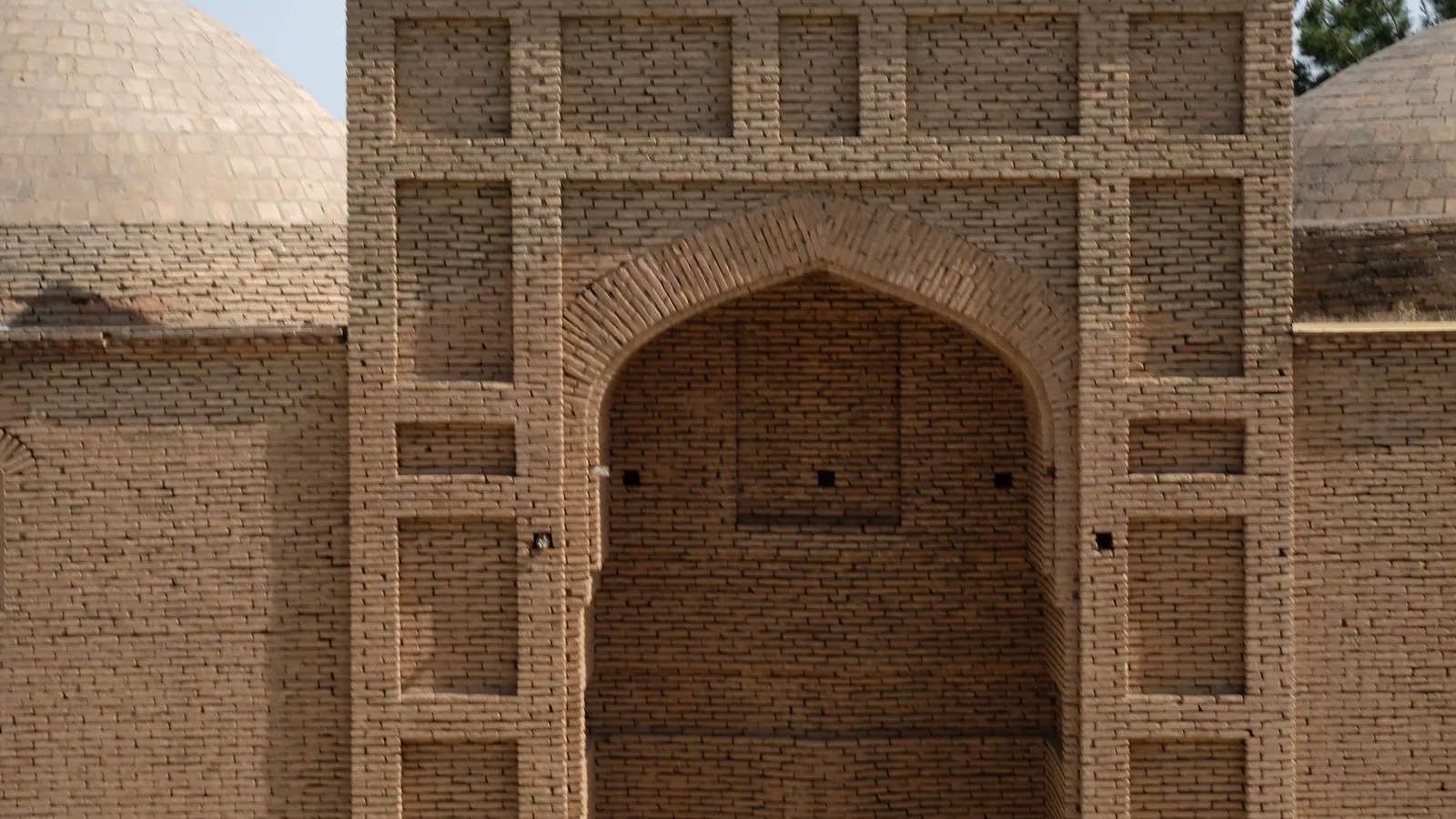
The ensemble is organised through courtyards and repeated domed chambers. Early brick architecture stands beside later additions, allowing visitors to compare changing proportions, portals and surface treatment.
Interpretation and uncertainty
It remains a sacred memorial place. Dating and individual tomb identifications vary across publications, so this guide avoids turning lineage traditions into absolute archaeological certainty.
Visiting responsibly
The calm architectural sequence rewards a slow visit, with modest clothing and priority given to worshippers and caretakers.
Why it matters
Visit Sultan Saodat Ensemble to understand a distinct layer of Termez and the wider Surkhandarya Region.
Highlights
- Historical context
- Archaeological and architectural evidence
- Interpretation and uncertainty
Gallery
Practical notes
Dress modestly and keep voices low. Ask before photographing people or devotional activity.
Suggested visit: 60 min.
Add this place to your Uzbekistan journey.
Save the places that interest you, arrange the order, then request transport directly in WhatsApp.