
The story
Origins and historical context
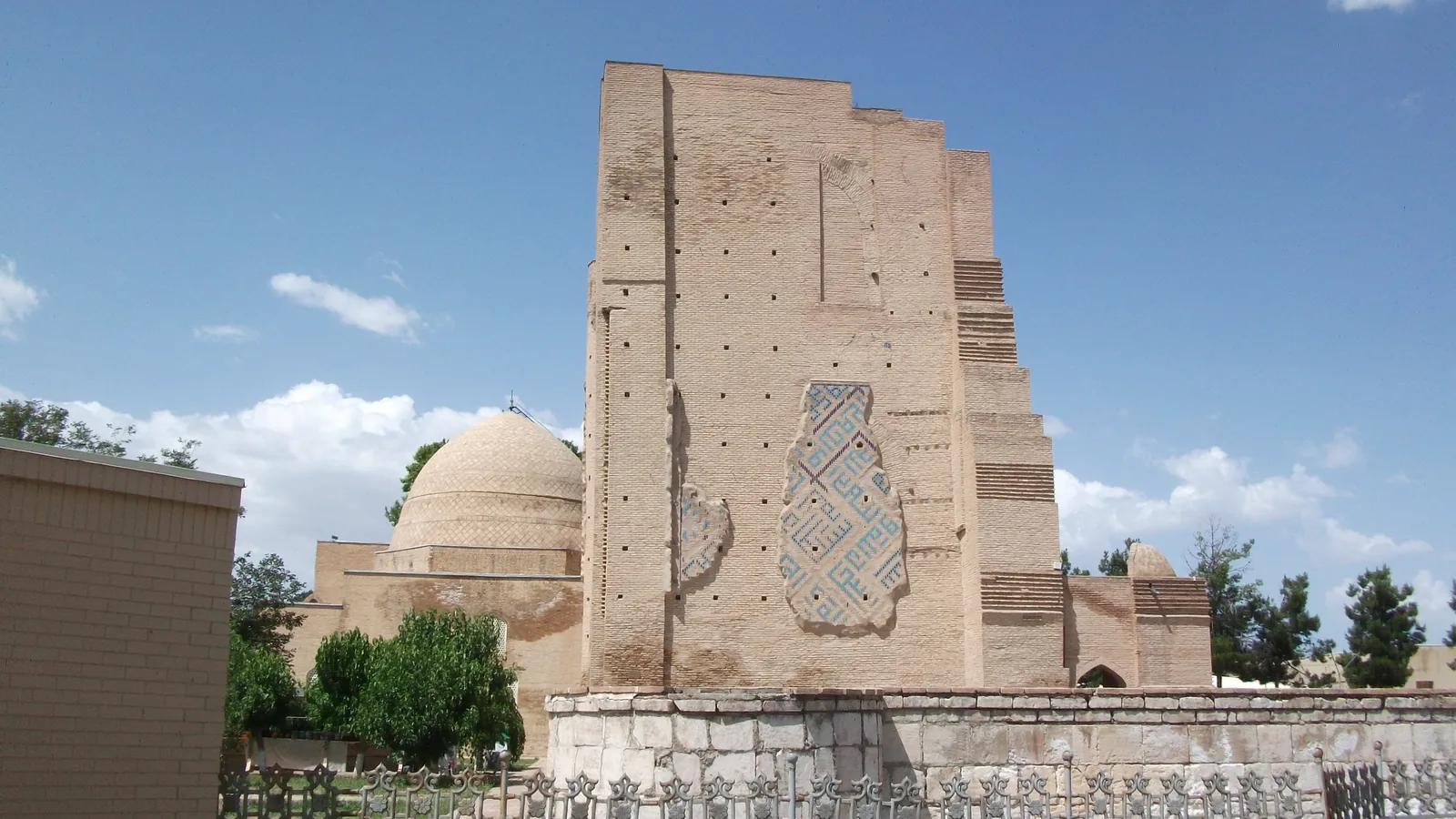
Dorus Saodat developed as a dynastic memorial after Jahangir, Timur’s eldest son, died in 1376. Construction continued over decades and once formed a much larger ceremonial and funerary ensemble.
Architecture and evidence
The Jahangir Mausoleum is the dominant survivor. Nearby are an underground chamber associated with a planned burial for Timur and the Hazrati Imam Mosque. Timur was ultimately buried at Gur-i Amir in Samarkand, so the underground chamber here should not be presented as his actual tomb.
Change, conservation and interpretation
Much of the original complex has disappeared. Archaeology, historic accounts and surviving masonry are needed to reconstruct its scale, and some traditional identifications remain debated.
How to experience it
Dorus Saodat is a component of the Historic Centre World Heritage property. Its fragmented condition makes careful distinction between surviving fabric, restoration and interpretation especially important.
Why it matters
Visit Dorus Saodat Complex to understand a distinct part of Shakhrisabz and the wider Kashkadarya Region.
Highlights
- Origins and historical context
- Architecture and evidence
- Change, conservation and interpretation
Gallery
Practical notes
Uneven surfaces and active religious use require care. See the Jahangir Mausoleum and underground chamber as one practical complex visit.
Suggested visit: 50 min.
Add this place to your Uzbekistan journey.
Save the places that interest you, arrange the order, then request transport directly in WhatsApp.