
The story
Origins and historical context
Amir Timur ordered Ak-Saray in the late fourteenth century, when Kesh was being reshaped as a dynastic centre. A dated inscription points to work in 1395–1396, but the palace was the result of a long building campaign involving artisans from across Timur’s domains.
Architecture and evidence
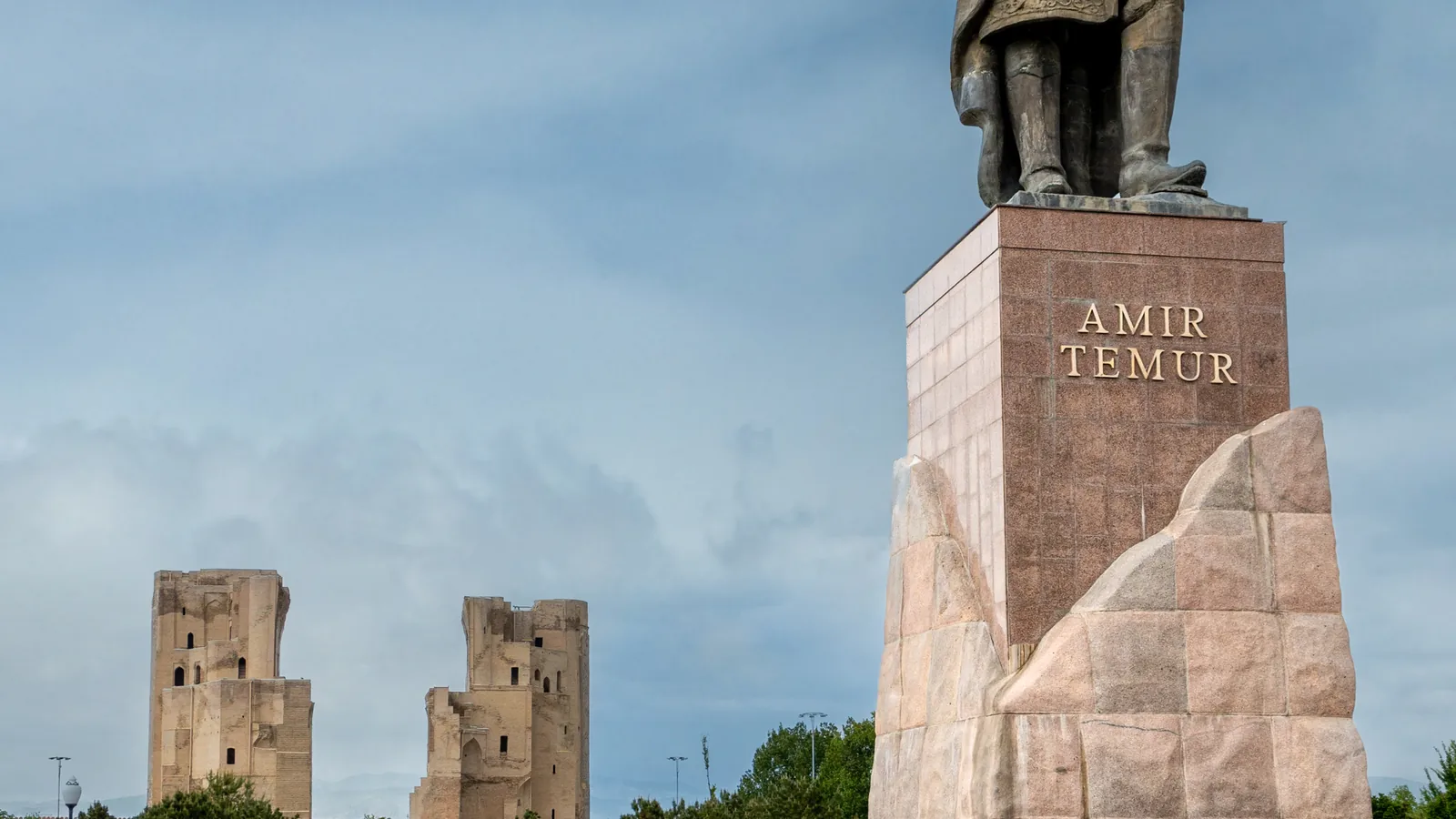
Only the immense entrance pylons and fragments of adjoining fabric survive. Their scale, brick mosaic and glazed decoration indicate a palace far larger than the ruin visible today. Accounts such as that of the Castilian envoy Ruy González de Clavijo help historians imagine the lost courts and reception spaces.
Change, conservation and interpretation
تراجع القصر لاحقاً وتفككت أجزاؤه بمرور الزمن. Its fragmentary state is therefore central to the visit: the monument is evidence of both Timurid ambition and centuries of loss, weathering and intervention.
How to experience it
UNESCO’s recent decisions identify Ak-Saray as a monument with complex conservation problems, including water ingress and restoration methodology. Visitors should read repaired surfaces and protective work critically rather than assuming everything visible is original.
Why it matters
Visit Ak-Saray Palace to understand a distinct part of Shakhrisabz and the wider Kashkadarya Region.
Highlights
- Origins and historical context
- Architecture and evidence
- Change, conservation and interpretation
Gallery
Practical notes
The open plaza has little shade; bring water and sun protection. Do not climb or touch fragile historic surfaces.
Suggested visit: 60 min.
Add this place to your Uzbekistan journey.
Save the places that interest you, arrange the order, then request transport directly in WhatsApp.