
The story
Origins and context
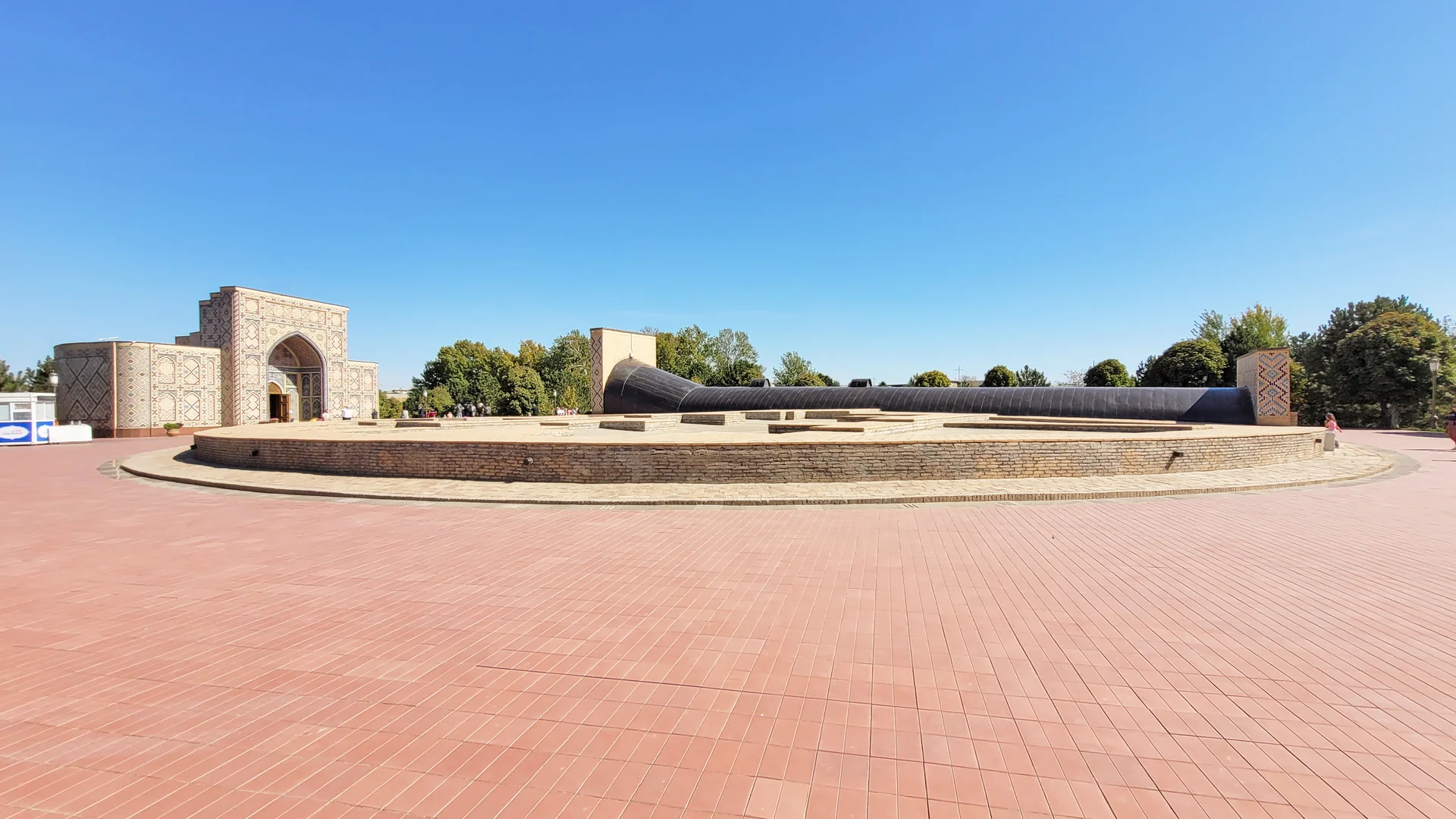
Ulugh Beg founded the observatory in the 1420s as part of Samarkand’s scientific life. Scholars working here produced the Zij-i Jadid-i Kuragoni, a star catalogue and astronomical tables noted for the precision achieved before telescopes.
Architecture and meaning
The most striking surviving element is the underground portion of a vast meridian instrument, often described as a sextant. Archaeology revealed the curved trench after the above-ground structure had disappeared.
Later history and interpretation
The museum explains the observatory, Ulugh Beg’s scholarly network and later rediscovery. Reconstructions are interpretive aids; the surviving masonry and instrument trench are the archaeological core.
Why it matters
Visit Ulugh Beg Observatory to understand a distinct layer of Samarkand’s history and visitor landscape.
Highlights
- Origins and context
- Architecture and meaning
- Later history and interpretation
Gallery
Practical notes
Check current opening and access information locally.
Suggested visit: 60 min.
Add this place to your Uzbekistan journey.
Save the places that interest you, arrange the order, then request transport directly in WhatsApp.