
The story
Origins and context
Shah-i-Zinda grew around a sacred association with Qusam ibn Abbas, traditionally identified as a cousin of the Prophet Muhammad. The claim belongs to a long religious tradition; the precise historical circumstances of his presence and burial in Samarkand cannot be verified in every detail.
Architecture and meaning
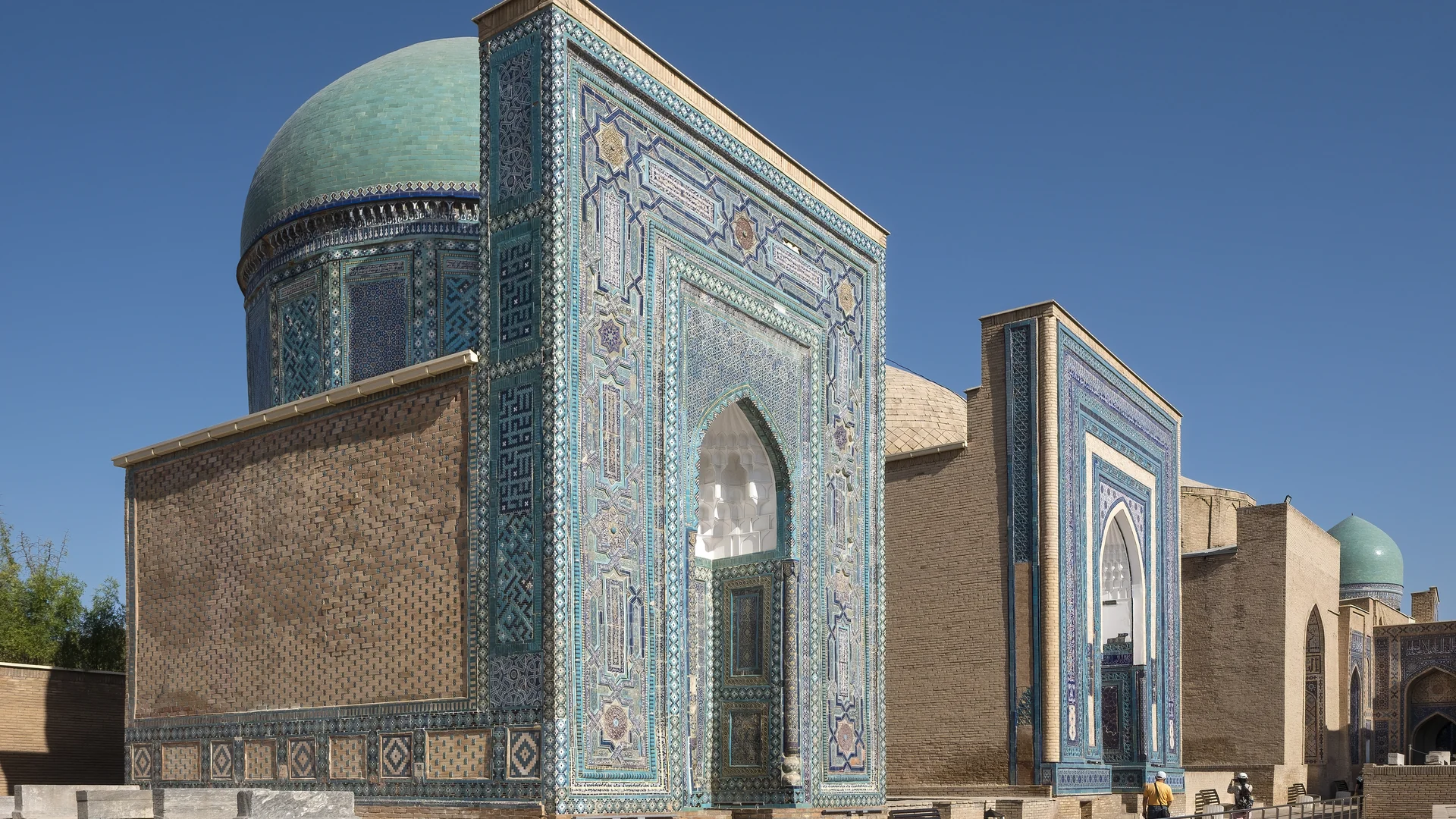
Most celebrated façades date from the fourteenth and fifteenth centuries, when members of the Timurid elite commissioned mausoleums along the passage. Earlier structures and later additions make the ensemble a sequence rather than a single-period monument.
Later history and interpretation
The extraordinary ceramic decoration records changing techniques: carved glazed terracotta, mosaic faience and painted surfaces. Conservation and restoration have also shaped what is visible today.
What to notice
This remains a sacred place as well as a major monument. Move slowly, keep voices low, respect worshippers and treat the stairway and corridor as a connected visit rather than a row of photo backdrops.
Why it matters
Visit Shah-i-Zinda to understand a distinct layer of Samarkand’s history and visitor landscape.
Highlights
- Origins and context
- Architecture and meaning
- Later history and interpretation
Gallery
Practical notes
Dress respectfully and keep voices low in active sacred spaces. Check current access locally; religious use takes priority.
Suggested visit: 90 min.
Add this place to your Uzbekistan journey.
Save the places that interest you, arrange the order, then request transport directly in WhatsApp.