
The story
Origins and context
Ishrat-Khana was built in the 1460s as a dynastic mausoleum, probably for women of the Timurid family. The exact original dedication and the identities of all burials are not entirely settled.
Architecture and meaning
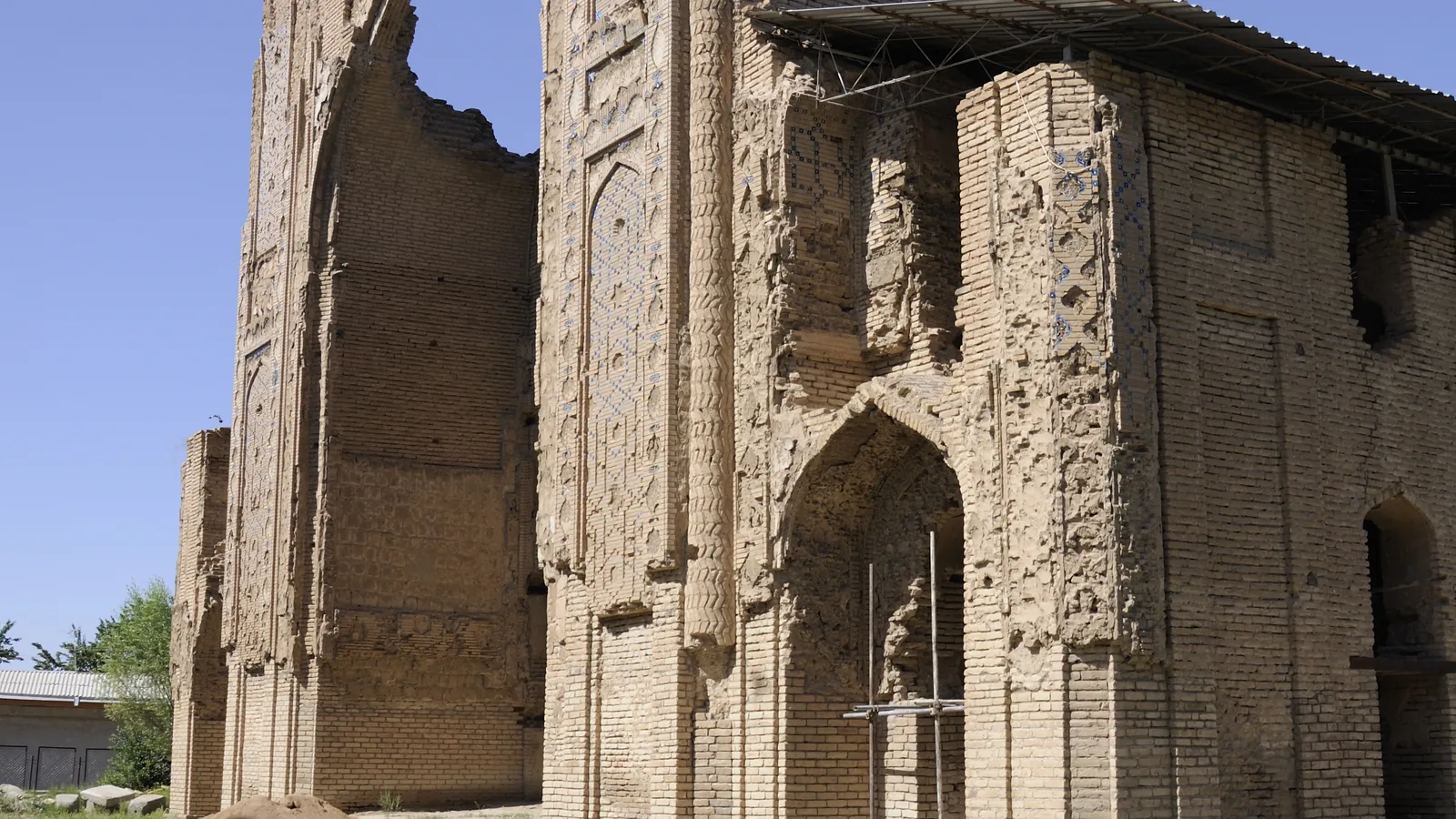
Its once complex dome system and richly decorated interior suffered heavily from earthquakes and long exposure. The ruin reveals structural layers usually concealed in more complete monuments.
Later history and interpretation
UNESCO includes Ishrat-Khana with Abdi-Darun as a component of the Samarkand property. Conservation conditions and access may change, so view the monument without entering closed or unstable areas.
Why it matters
Visit Ishrat-Khana Mausoleum to understand a distinct layer of Samarkand’s history and visitor landscape.
Highlights
- Origins and context
- Architecture and meaning
- Later history and interpretation
Gallery
Practical notes
Dress respectfully and keep voices low in active sacred spaces. Check current access locally; religious use takes priority.
Suggested visit: 35 min.
Add this place to your Uzbekistan journey.
Save the places that interest you, arrange the order, then request transport directly in WhatsApp.