
The story
Origins and historical context
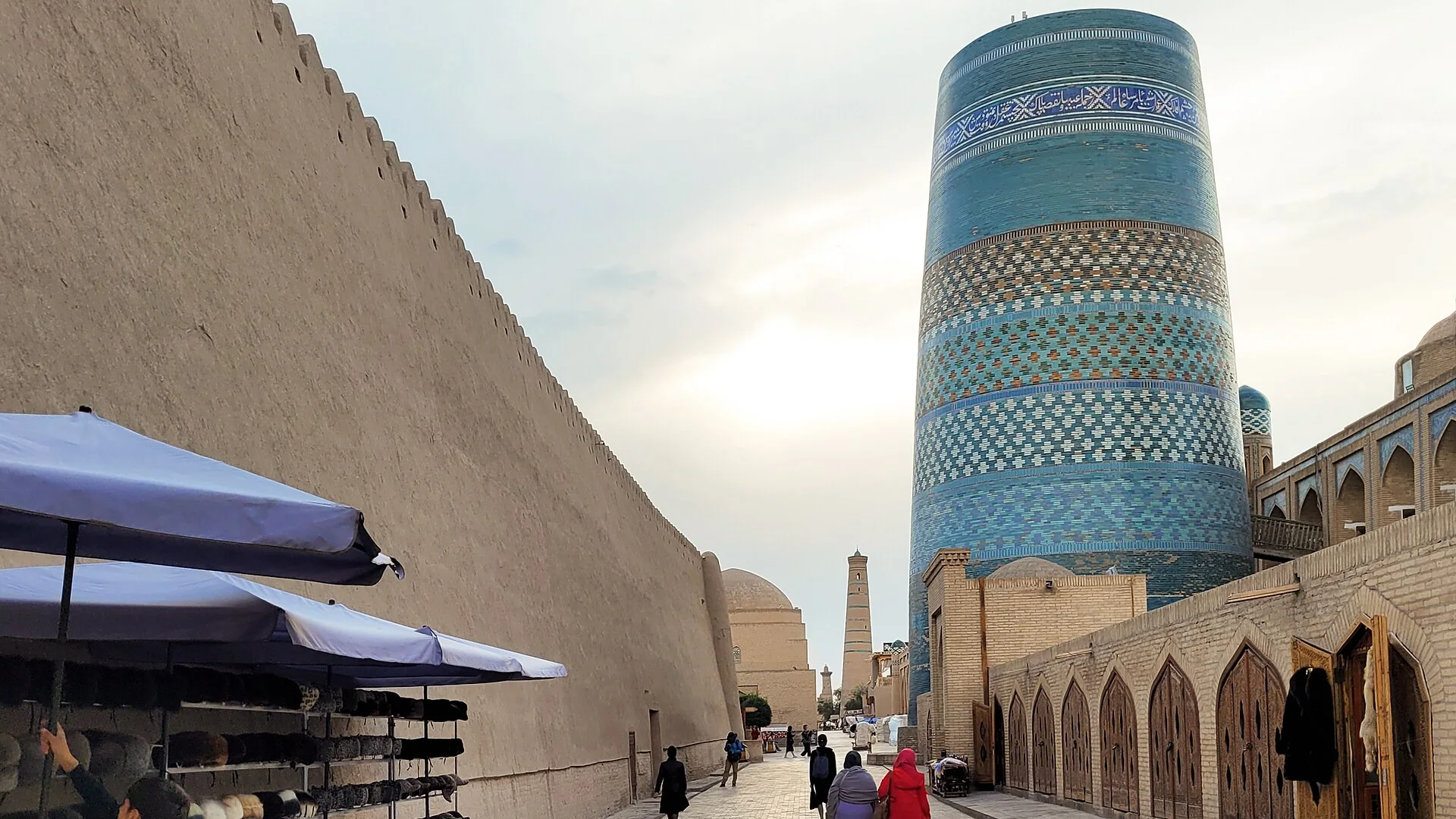
Muhammad Amin Khan commissioned Kalta Minor beside his madrasa in the early 1850s. Work stopped after the khan’s death in 1855, leaving the tower far shorter than the monumental minaret originally intended.
Architecture and use
Popular stories claim it was planned as the tallest minaret in Central Asia or that its architect was threatened. Such narratives are part of Khiva’s storytelling tradition, but the exact intended height and circumstances are not securely documented.
Later history and interpretation
Its broad cylindrical body is wrapped in glazed tile bands whose turquoise, blue and white patterns change in desert light. The unusual proportions make the unfinished structure visually complete in its own way.
Why it matters
Visit Kalta Minor to understand a distinct layer of Khiva and Khorezm beyond a checklist of façades.
Highlights
- Origins and historical context
- Architecture and use
- Later history and interpretation
Gallery
Practical notes
Wear comfortable shoes for stone, brick and uneven walking surfaces. In hot weather, plan shade and water breaks and confirm current access locally.
Suggested visit: 25 min.
Add this place to your Uzbekistan journey.
Save the places that interest you, arrange the order, then request transport directly in WhatsApp.