
The story
Origins and historical context
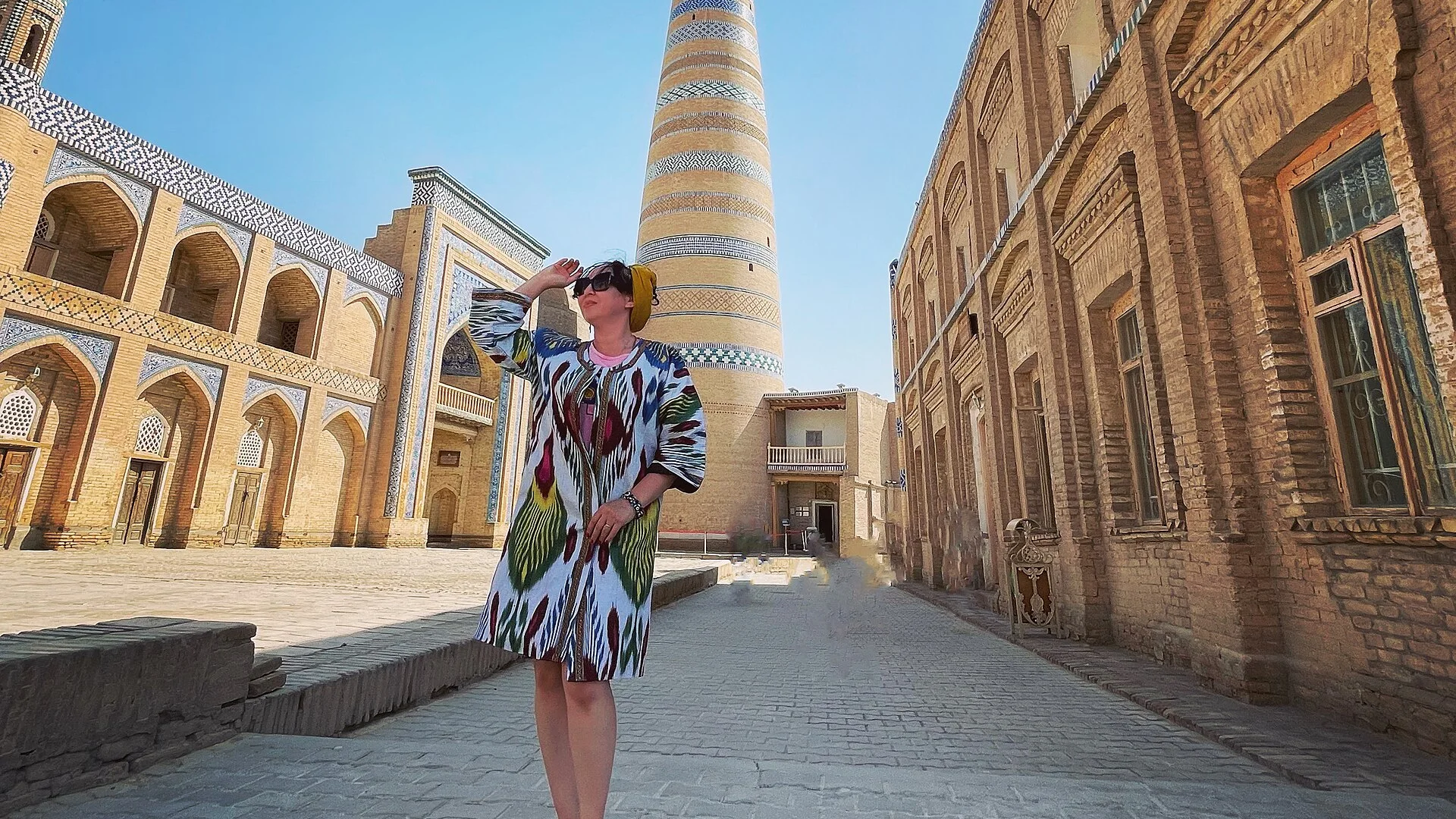
The Islam Khoja ensemble was built in 1908–1910 under Islam Khoja, grand vizier and father-in-law of Khan Asfandiyar. Its minaret deliberately draws on older Khivan forms while rising above the dense historic town.
Architecture and use
Bands of blue, white and turquoise tile articulate the tapering shaft. The ensemble pairs the minaret with a compact madrasa, showing how traditional architecture remained active during a period of political and technological change.
Later history and interpretation
Access to stairs or upper viewpoints may change. If climbing is open, expect a confined ascent; check conditions locally and do not assume universal access.
Why it matters
Visit Islam Khoja Minaret to understand a distinct layer of Khiva and Khorezm beyond a checklist of façades.
Highlights
- Origins and historical context
- Architecture and use
- Later history and interpretation
Gallery
Practical notes
Wear comfortable shoes for stone, brick and uneven walking surfaces. In hot weather, plan shade and water breaks and confirm current access locally.
Suggested visit: 35 min.
Add this place to your Uzbekistan journey.
Save the places that interest you, arrange the order, then request transport directly in WhatsApp.