
The story
Origins and historical context
Pahlavan Mahmud is remembered as a thirteenth- to fourteenth-century poet, craftsman and wrestler whose tomb became a focus of devotion. Biographical details mix written history and local tradition, so legendary feats should be presented as tradition rather than certain fact.
Architecture and use
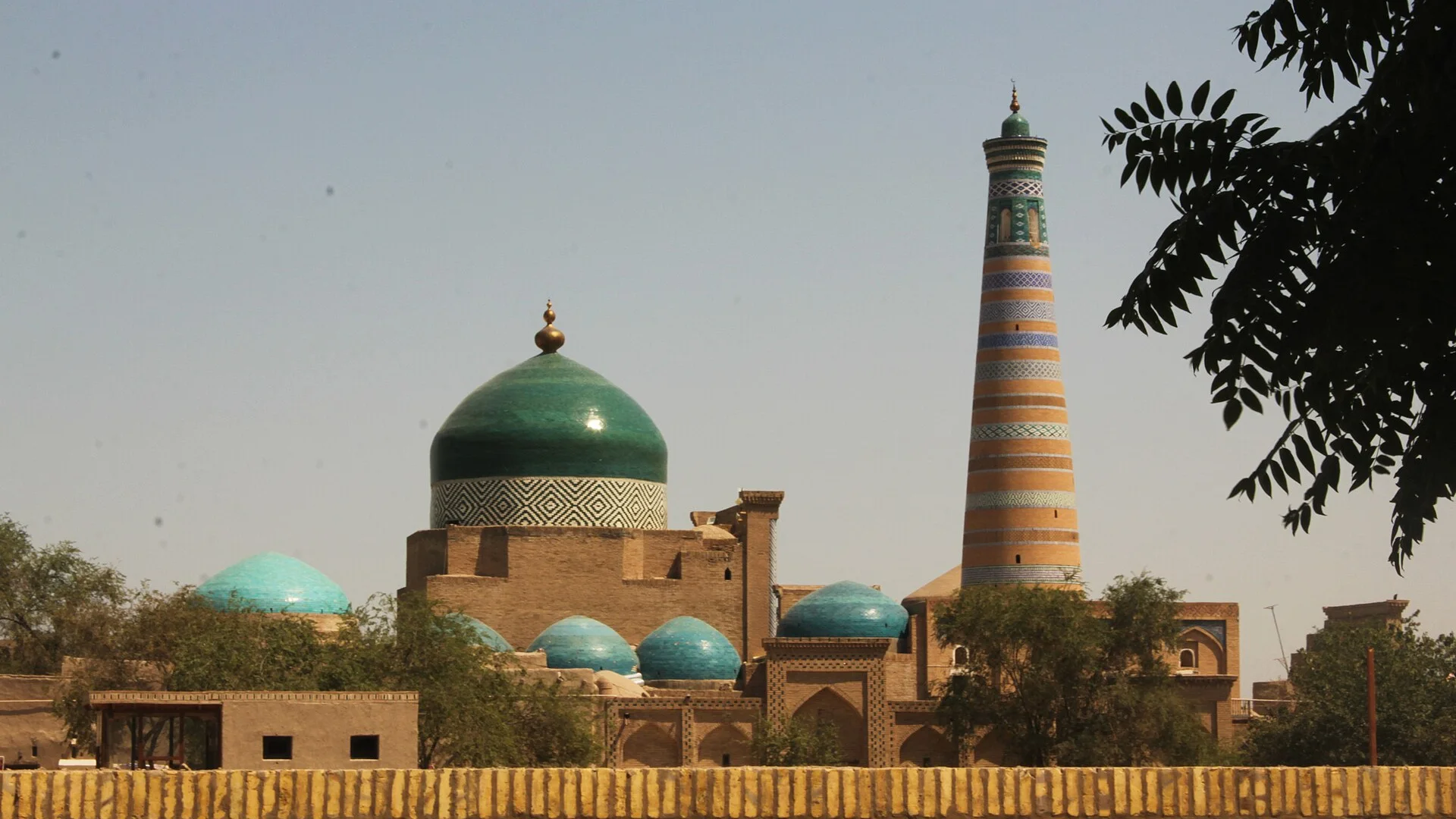
The modest burial place developed into a larger complex, especially in the nineteenth century, and became a dynastic burial place for Khivan rulers. Its domed chamber and intense blue tilework belong to this later architectural history.
Later history and interpretation
The complex remains religiously meaningful. Dress respectfully, avoid interrupting prayer, and notice how poetry, patronage and dynastic memory meet within a compact group of chambers.
Why it matters
Visit Pahlavan Mahmud Mausoleum to understand a distinct layer of Khiva and Khorezm beyond a checklist of façades.
Highlights
- Origins and historical context
- Architecture and use
- Later history and interpretation
Gallery
Practical notes
Dress respectfully and keep voices low in active sacred spaces. Check current access locally; worship and community use take priority.
Suggested visit: 50 min.
Add this place to your Uzbekistan journey.
Save the places that interest you, arrange the order, then request transport directly in WhatsApp.