
The story
Origins and historical context
The present Juma Mosque largely took shape in the late eighteenth century, but some of its wooden columns and carved elements are older and may have been reused from earlier structures. The building therefore preserves layers rather than a single construction moment.
Architecture and use
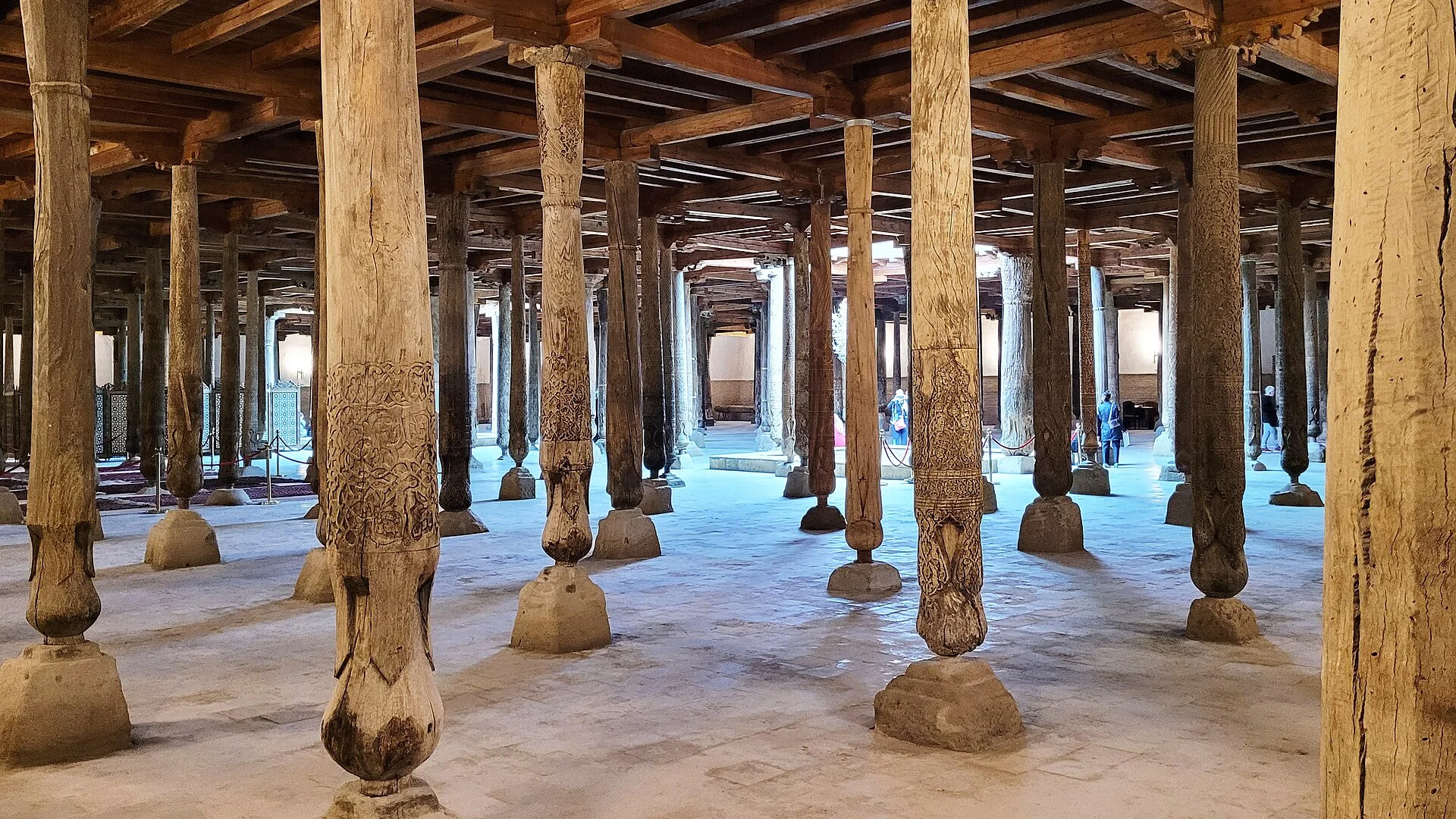
A flat roof rests on more than two hundred wooden columns. Their varied carving, bases and dates create an interior unlike the domed or courtyard mosques more familiar elsewhere in Uzbekistan.
Later history and interpretation
Filtered light and repeated columns reward a quiet visit. This is a sacred space: dress respectfully, keep voices low and let worship take priority over photography.
Why it matters
Visit Juma Mosque of Khiva to understand a distinct layer of Khiva and Khorezm beyond a checklist of façades.
Highlights
- Origins and historical context
- Architecture and use
- Later history and interpretation
Gallery
Practical notes
Dress respectfully and keep voices low in active sacred spaces. Check current access locally; worship and community use take priority.
Suggested visit: 45 min.
Add this place to your Uzbekistan journey.
Save the places that interest you, arrange the order, then request transport directly in WhatsApp.