
The story
Historical context
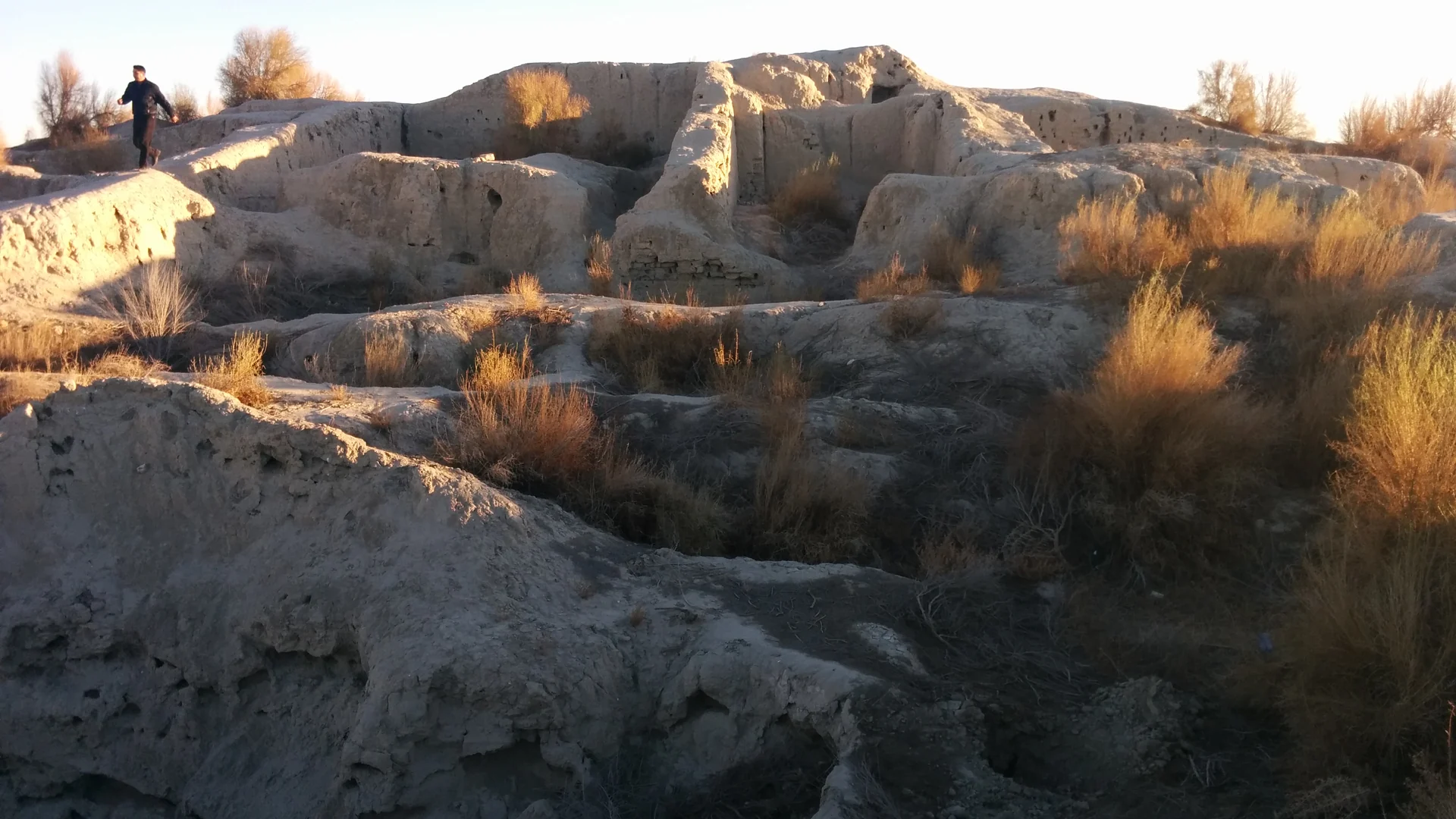
Varakhsha stood on the road from Bukhara toward Khorezm and served as a residence of the Bukhar Khudas before the Arab conquest. Excavation revealed a fortified settlement and palace whose paintings are now studied through museum collections and scholarship. The site itself is fragile and exposed.
How to read the place
Varakhsha’s significance comes from the oasis network around Bukhara as much as from the surviving earthworks. The settlement linked political residence, irrigated agriculture and the road toward Khorezm before the Islamic city reached its later form.
Place in the city and route
Archaeological interpretation depends on excavated evidence and museum-held material; the open site does not preserve a complete palace experience. Visitors should therefore treat the landscape, defensive outlines and fragility of the earthen remains as the central story.
Before you visit
Access and ground conditions can change. A visit should be planned with current local information, suitable transport and strict avoidance of walking on vulnerable walls.
Why it matters
The desert-edge ruins let visitors read the landscape behind Bukhara’s earlier history.
Highlights
- Citadel earthworks
- Palace remains
- Open oasis landscape
Gallery
Practical notes
Travel with current local guidance, water and sun protection; never climb fragile walls.
Suggested visit: 1–2 hours.
Add this place to your Uzbekistan journey.
Save the places that interest you, arrange the order, then request transport directly in WhatsApp.