
The story
Historical context
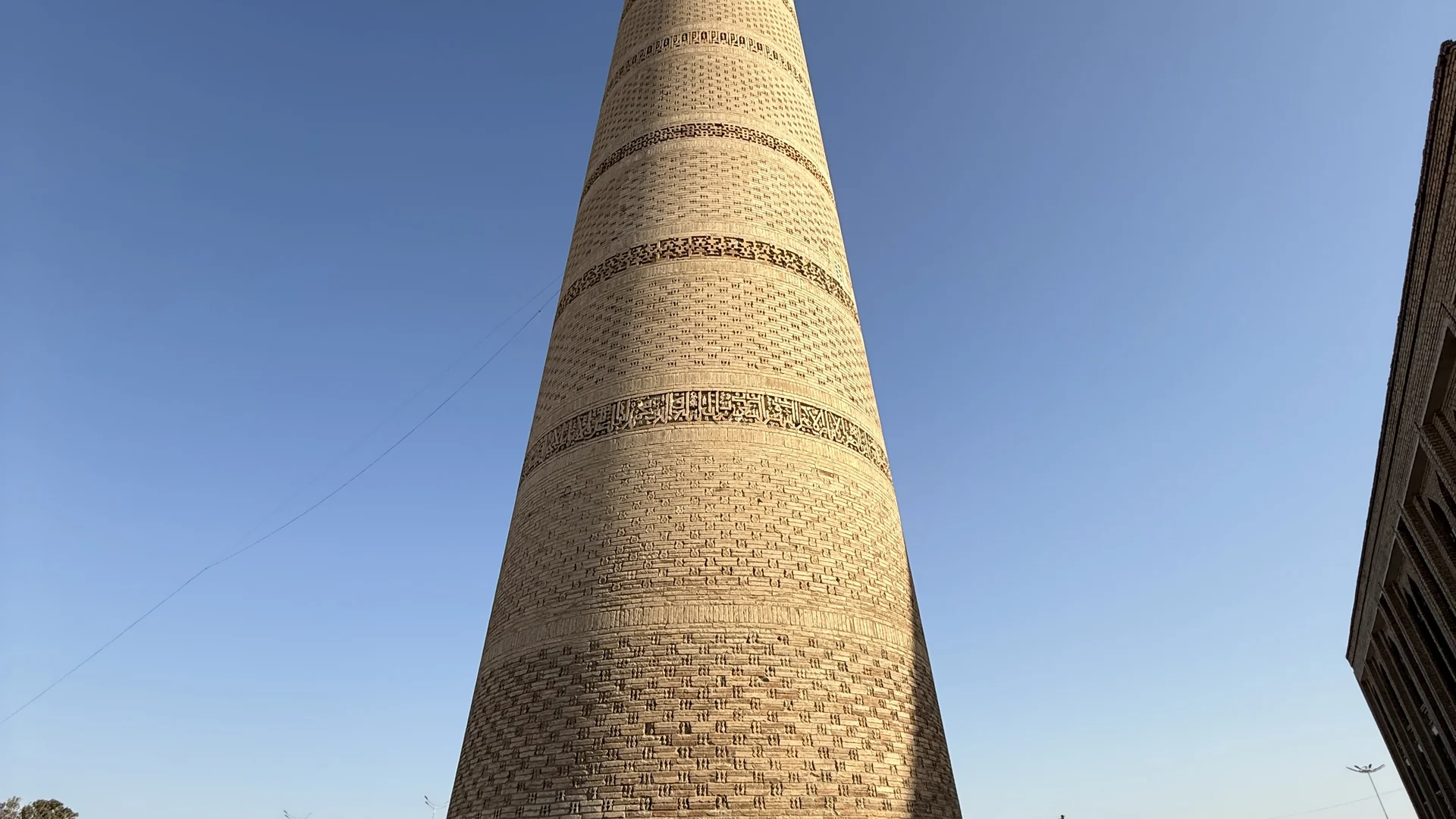
The minaret is generally dated to the late twelfth century and carries bands of patterned brick and inscription. Its form invites comparison with Bukhara’s Kalyan Minaret while retaining its own proportions and local setting.
How to read the place
It turns a regional drive into a focused encounter with Karakhanid engineering and decoration. The place is easier to understand alongside Mahmud Anjir Faghnavi Memorial, Gijduvan Ceramics Museum and Workshop, Abd al-Khaliq Ghijduwani Memorial.
Why it matters today
It turns a regional drive into a focused encounter with Karakhanid engineering and decoration. Its significance comes from the relationship between the surviving place, its setting and the people who continue to use or interpret it.
What to notice
Look for patterned brick bands, kufic inscription, and town panorama. View from several distances
Why it matters
It turns a regional drive into a focused encounter with Karakhanid engineering and decoration.
Highlights
- Patterned brick bands
- Kufic inscription
- Town panorama
Gallery
Practical notes
View from several distances; the surrounding area is an active town, not a museum precinct.
Suggested visit: 30–45 min.
Add this place to your Uzbekistan journey.
Save the places that interest you, arrange the order, then request transport directly in WhatsApp.