
The story
Historical context
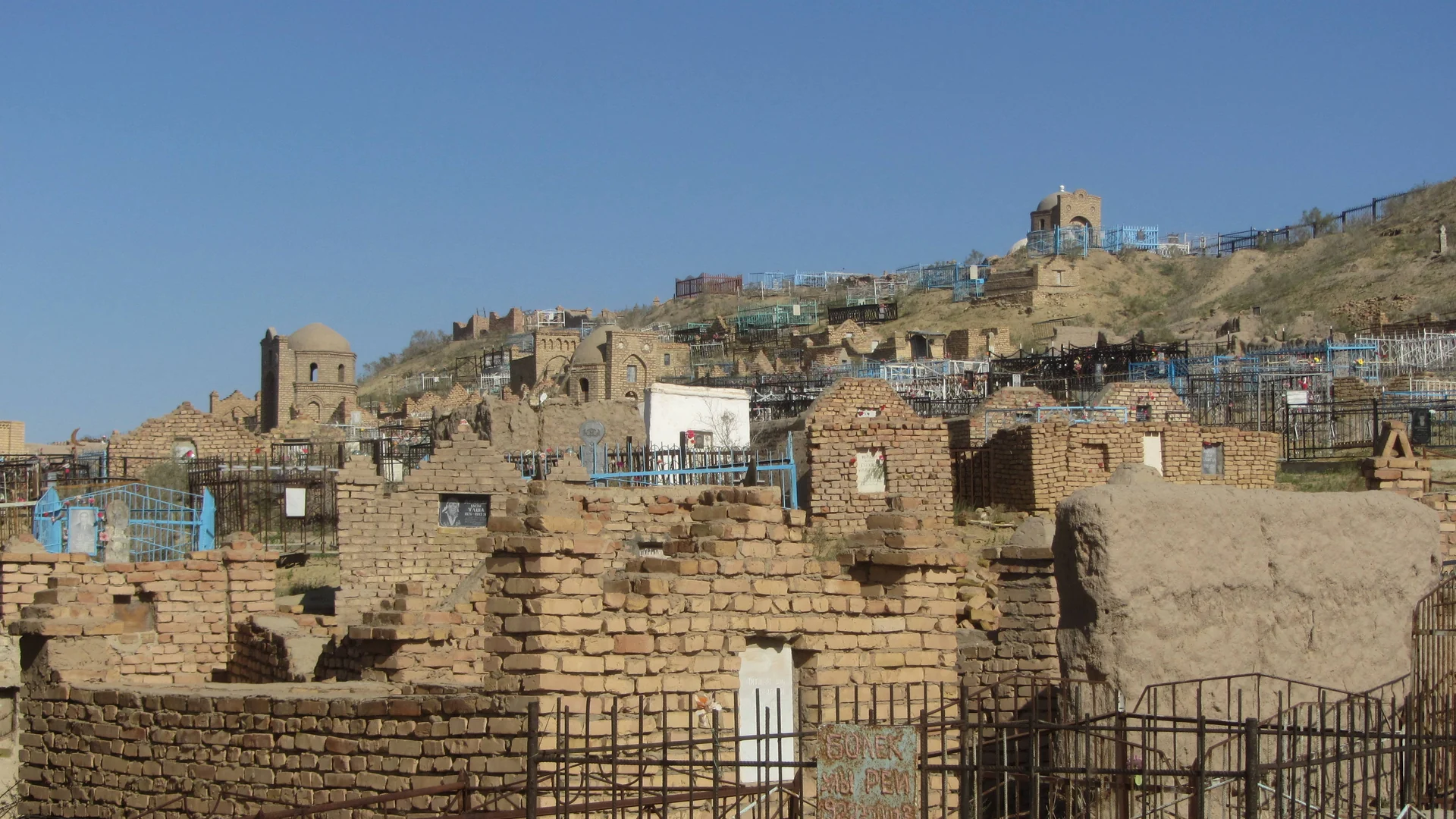
Mizdakhan is not a single mausoleum. Archaeological remains document long occupation, while the extensive necropolis contains monuments from different Islamic periods and continues to carry sacred meaning.
Archaeology and material evidence
The landscape includes ruined settlement areas, burial grounds and named mausoleums. Individual dates and identities are not equally secure, and restoration affects some visible structures.
Interpretation and uncertainty
Local traditions associated with Adam, the end of the world and particular tombs are important cultural narratives, not archaeological proof. They should be heard respectfully and described as legend or belief.
Visiting responsibly
Treat the whole area as a sacred landscape: dress modestly, avoid stepping on graves, and use current local guidance to understand where visitors may walk.
Why it matters
Visit Mizdakhan Archaeological and Sacred Landscape to understand a distinct part of Karakalpakstan’s cultural or environmental landscape.
Highlights
- Historical context
- Archaeology and material evidence
- Interpretation and uncertainty
Gallery
Practical notes
Use a knowledgeable local guide to distinguish monuments and traditions. Keep voices low and never climb or cross graves.
Suggested visit: 120 min.
Add this place to your Uzbekistan journey.
Save the places that interest you, arrange the order, then request transport directly in WhatsApp.