
The story
Historical context
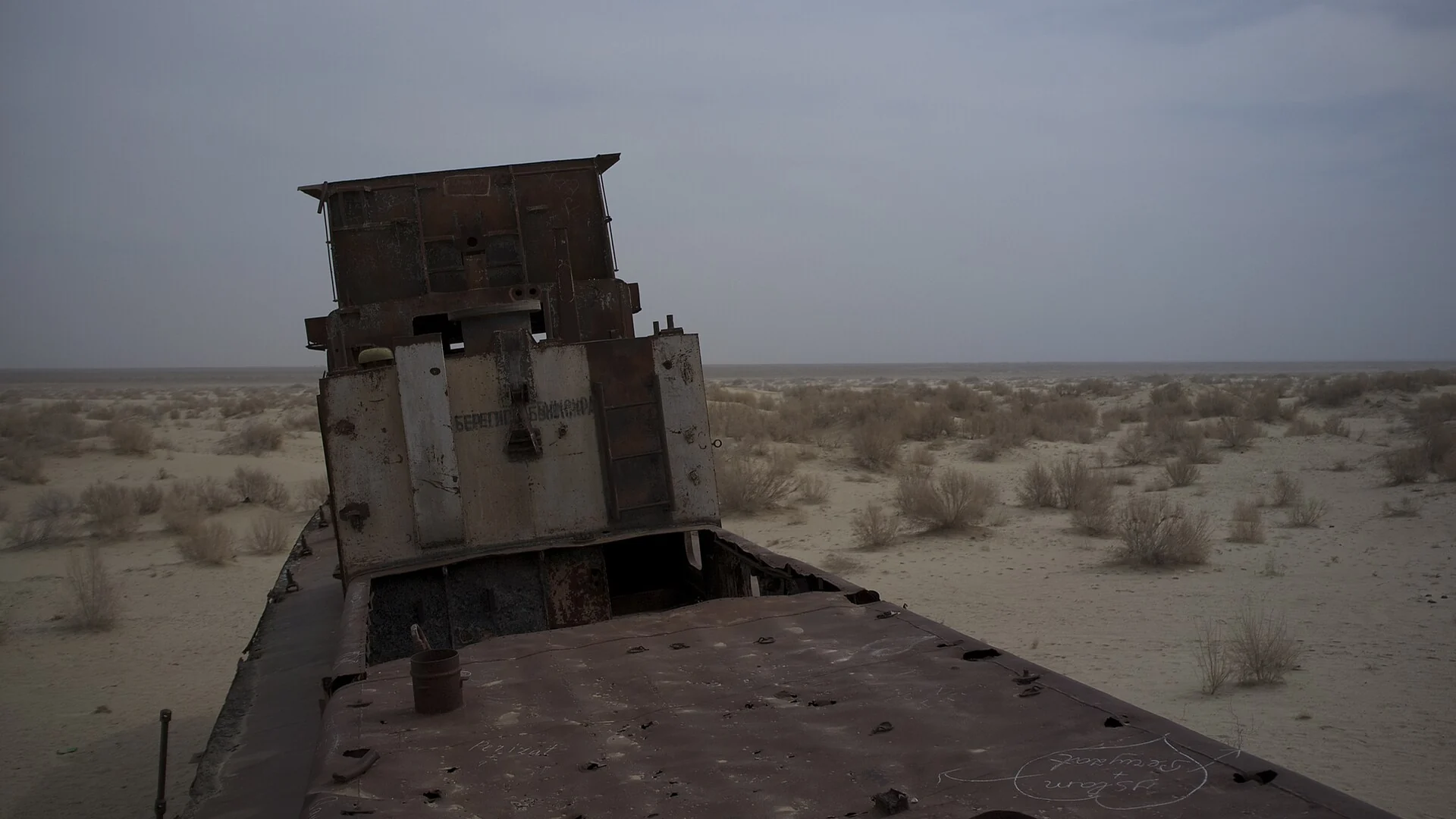
Muynak developed as a fishing and processing centre when the Aral Sea reached the region. River diversion for irrigation accelerated the sea’s shrinkage from the 1960s, transforming the port, economy and surrounding ecology.
Archaeology and material evidence
The town is not the present shoreline and should not be marketed as if remaining open water were beside it. The exposed former seabed and maritime memory are part of the visit; reaching current water bodies is a separate remote journey.
Interpretation and uncertainty
Environmental damage affected livelihoods, health and landscapes across communities. Visit with care: the story is not a “post-apocalyptic” attraction but lived history and continuing adaptation.
Visiting responsibly
Use Muynak’s museum and ship cemetery as connected local stops, while confirming any wider Aral expedition separately.
Why it matters
Visit Muynak to understand a distinct part of Karakalpakstan’s cultural or environmental landscape.
Highlights
- Historical context
- Archaeology and material evidence
- Interpretation and uncertainty
Gallery
Practical notes
Begin with the museum for historical context. Do not assume Muynak is the departure point for every current Aral route.
Suggested visit: 150 min.
Add this place to your Uzbekistan journey.
Save the places that interest you, arrange the order, then request transport directly in WhatsApp.