
The story
Architecture in Margilan
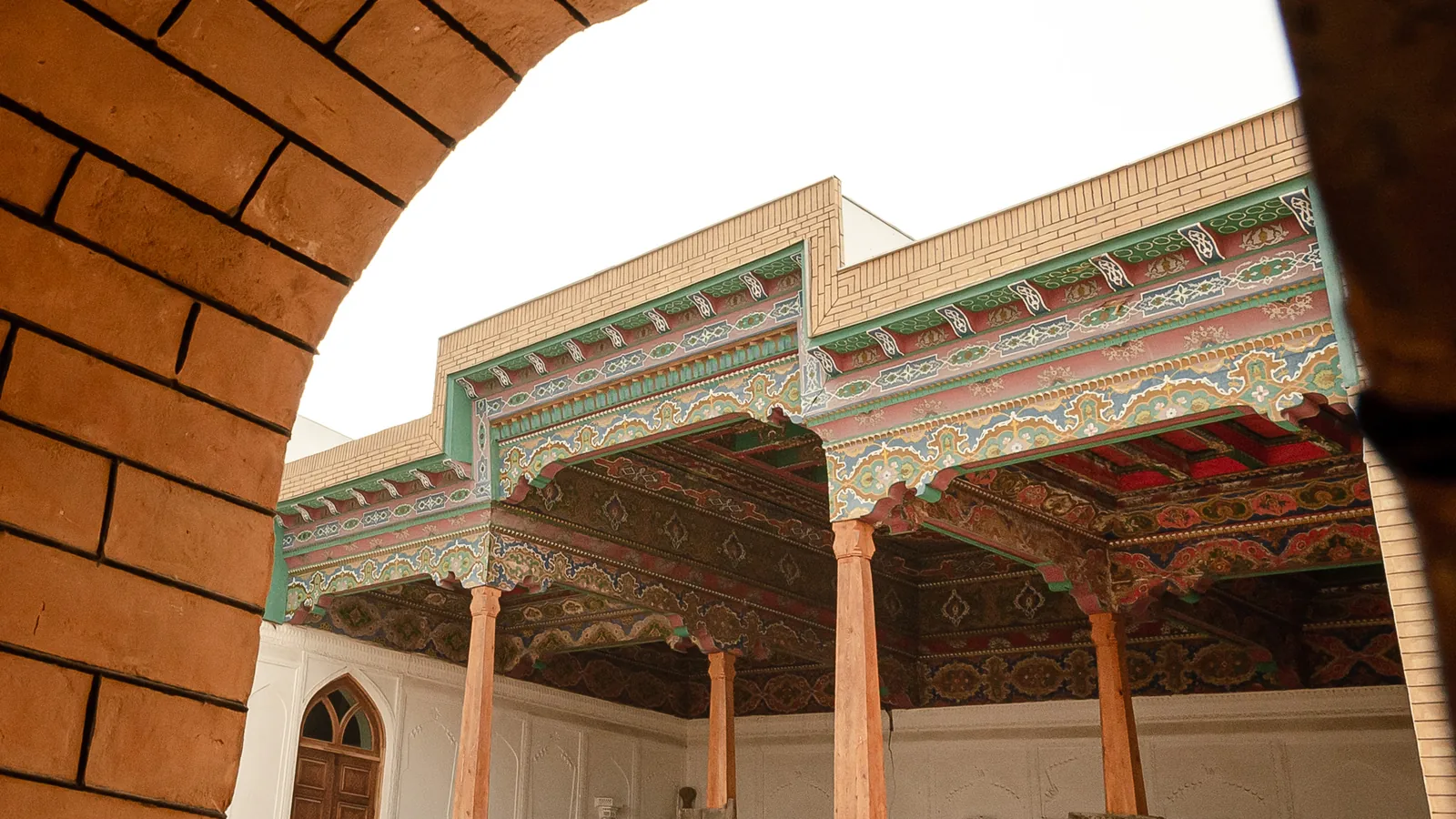
The madrasa belongs to Margilan’s surviving religious and educational architecture. Its courtyard, cells and decorated timber elements offer a quieter architectural counterpoint to the city’s textile workshops.
Changing uses
Like many Central Asian madrasas, the building’s functions have changed. Contemporary craft activity associated with the setting should be described as present-day reuse, not automatically as an unbroken continuation of the original institution.
Reading details
Look for carved and painted wooden elements, courtyard proportions and the relationship between workspaces and former cells. Restoration may be visible alongside older material.
Place in the city
Combine the madrasa with a silk visit, but allow each to retain its own meaning: one explains built heritage and changing use, the other production knowledge.
Why it matters
It adds architectural depth to a Margilan visit otherwise focused mainly on textile production.
Highlights
- Architecture in Margilan
- Changing uses
- Reading details
Gallery
Practical notes
Respect any active religious or craft use and ask before entering work areas. Combine it with Yodgorlik without assuming that both follow the same visitor schedule.
Suggested visit: 40 min.
Add this place to your Uzbekistan journey.
Save the places that interest you, arrange the order, then request transport directly in WhatsApp.