
The story
A modern institution with older skills
Yodgorlik opened in 1972, so it should not be described as an unchanged ancient factory. Its significance lies in maintaining and demonstrating older stages of silk preparation, natural dyeing and hand weaving within a modern institution.
How ikat is made
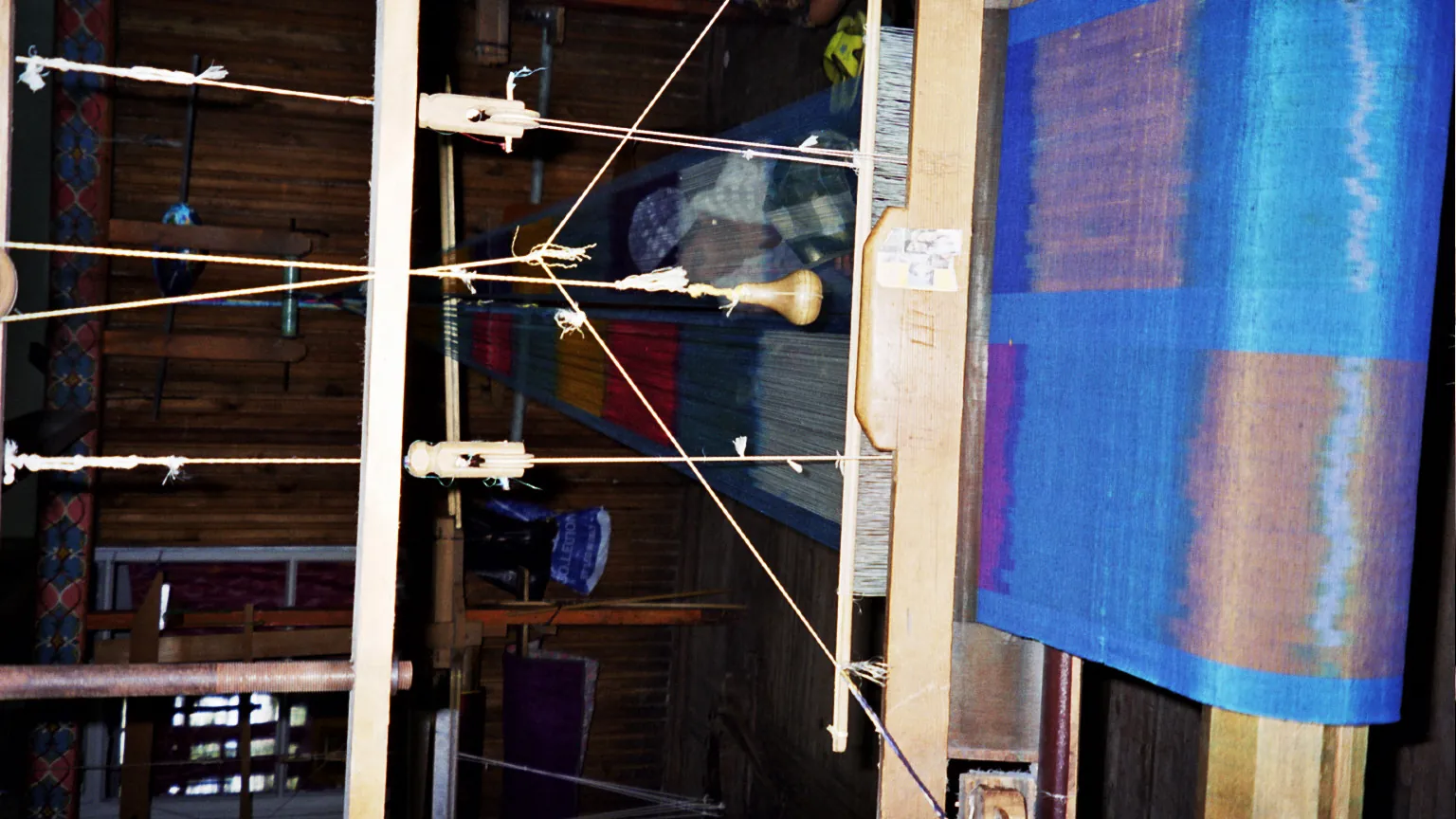
The pattern is planned on grouped warp threads before they reach the loom. Binding and repeated dyeing create soft-edged colour fields; weaving then reveals the design as atlas or adras fabric. Seeing the sequence is more informative than viewing finished cloth alone.
Heritage and commerce
The factory is both a production business and a place where visitors may encounter craft knowledge. UNESCO recognition applies to safeguarding practices and the wider traditions of sericulture and silk weaving, not to Yodgorlik as an individually listed World Heritage monument.
Planning a visit
Operations and demonstrations depend on current work. Confirm access rather than promising a complete production cycle on every visit, and ask permission before photographing people.
Why it matters
It offers one of the clearest practical introductions to how Margilan’s famous patterned textiles are actually produced.
Highlights
- A modern institution with older skills
- How ikat is made
- Heritage and commerce
Gallery
Practical notes
Confirm current visitor access and whether production stages are operating. Treat purchases as optional and ask before photographing artisans.
Suggested visit: 75 min.
Add this place to your Uzbekistan journey.
Save the places that interest you, arrange the order, then request transport directly in WhatsApp.