
The story
Historical context
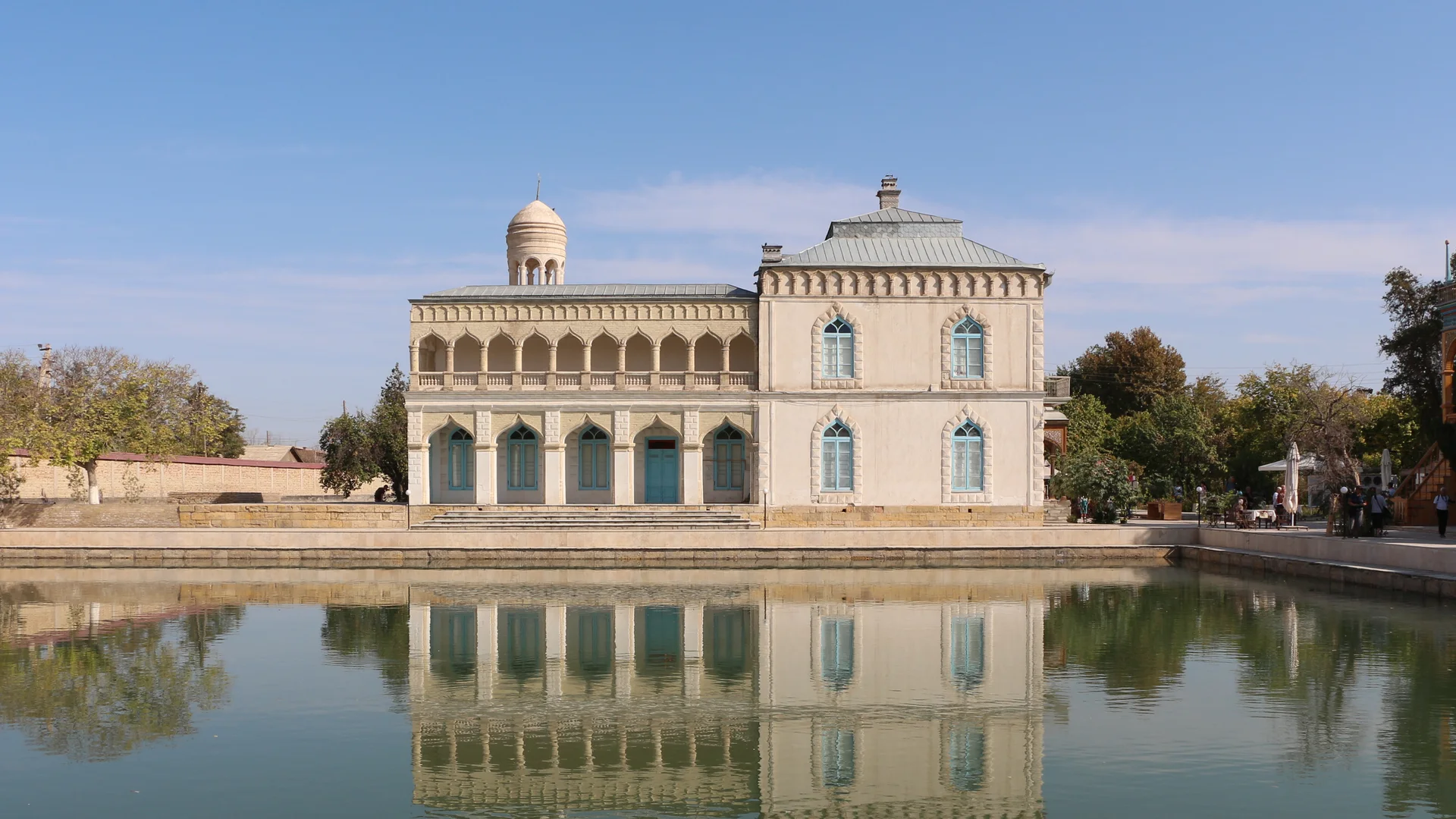
Sitorai Mokhi-Khosa was the country residence of the last generations of Bukhara’s emirs. The present palace complex is associated mainly with the late nineteenth and early twentieth centuries, when court culture absorbed local and European influences.
How to read the place
Reception rooms combine carved plaster, mirrors, colour and imported details with Bukharan craftsmanship. The result is not a simple copy of one style but evidence of a court negotiating modernity, diplomacy and tradition.
Place in the city and route
The palace is outside the old-city walking circuit, so it works best as a deliberate stop. Museum arrangements and room access can change; the enduring reason to visit is the contrast between its interiors, gardens and the architecture of central Bukhara.
Before you visit
The palace belongs to a different urban world from the old-city madrasas. Reception rooms, gardens and decorative interiors express the late emirate’s court culture and its selective engagement with Russian and European design.
Practical context
Because the complex stands outside the historic core, it works best as a planned transport stop. Its value lies in the contrast: it extends Bukhara’s story beyond medieval monuments into the political and aesthetic choices of the early twentieth century.
Why it matters
It broadens the Bukhara story beyond mosques and madrasas into domestic and courtly life.
Highlights
- Reception interiors
- Decorative plasterwork
- Garden setting
Gallery
Practical notes
It requires transport from the old city; combine it with other out-of-centre sites.
Suggested visit: 60–90 min.
Add this place to your Uzbekistan journey.
Save the places that interest you, arrange the order, then request transport directly in WhatsApp.