
The story
Historical context
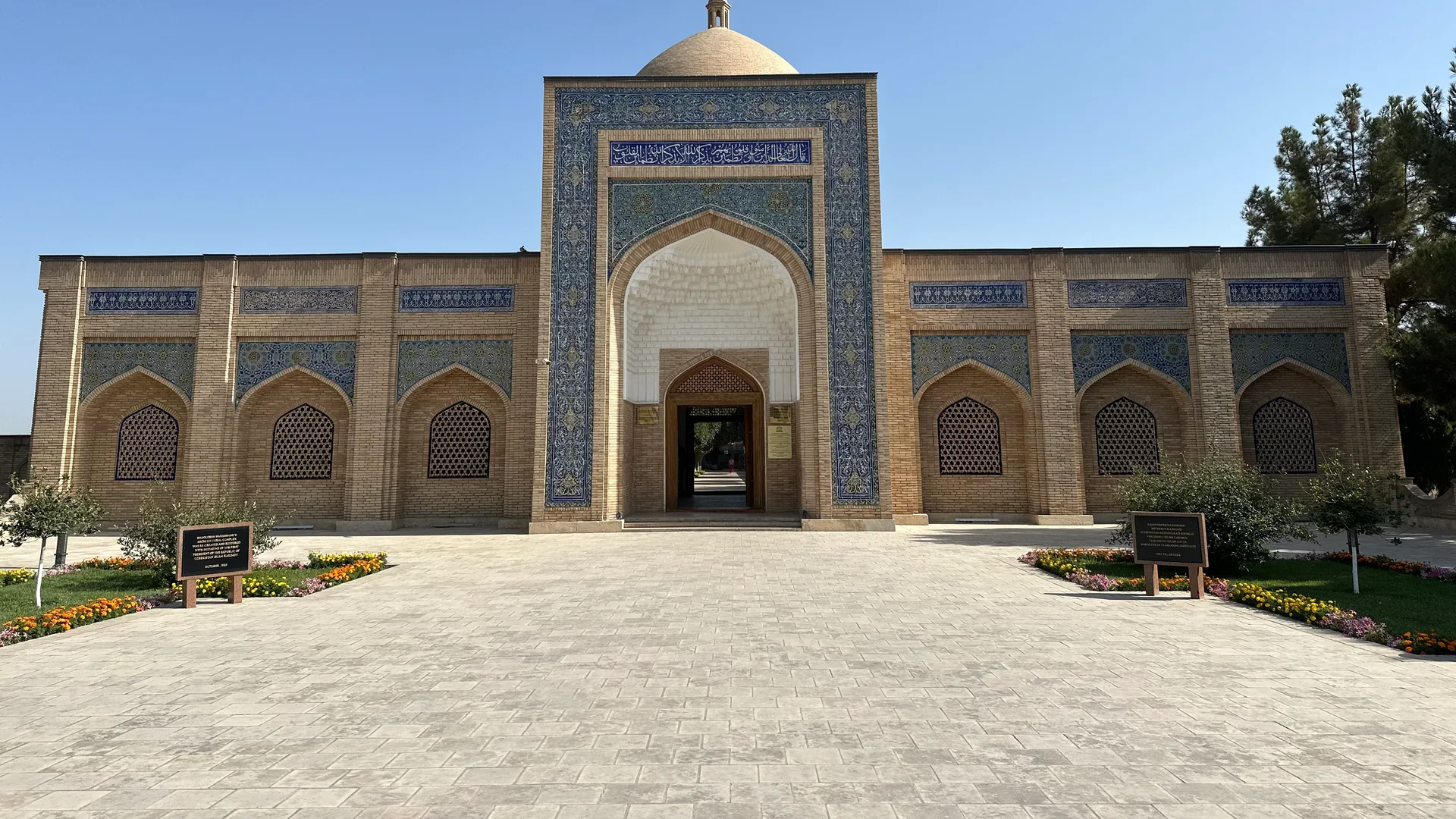
The memorial complex at Qasr-i Arifan honours Bahauddin Naqshband, the fourteenth-century spiritual teacher whose name became associated with the Naqshbandi Sufi tradition. It remains an active destination for pilgrims.
How to read the place
The site developed over time around the burial place and includes religious, memorial and communal spaces from different periods. Its importance therefore lies in continuing practice as much as in architecture.
Place in the city and route
Visitors should approach it as a living sacred place, not simply an attraction. It can also serve as the concluding point for understanding the wider Seven Saints landscape across Bukhara Region.
Before you visit
The memorial is a living pilgrimage destination, not an archaeological display. Courtyards, prayer areas and commemorative structures are used within an active devotional landscape whose meaning cannot be reduced to architecture alone.
Practical context
Visitors should distinguish documented history from devotional tradition and follow current local guidance. A quiet visit, appropriate clothing and restraint with photography matter more here than completing a checklist of buildings.
Why it matters
A visit offers insight into the spiritual geography surrounding Bukhara.
Highlights
- Memorial courtyard
- Pilgrimage atmosphere
- Religious architecture
Gallery
Practical notes
Dress and behave respectfully, keep voices low and follow local instructions.
Suggested visit: 60–90 min.
Add this place to your Uzbekistan journey.
Save the places that interest you, arrange the order, then request transport directly in WhatsApp.