
The story
Historical context
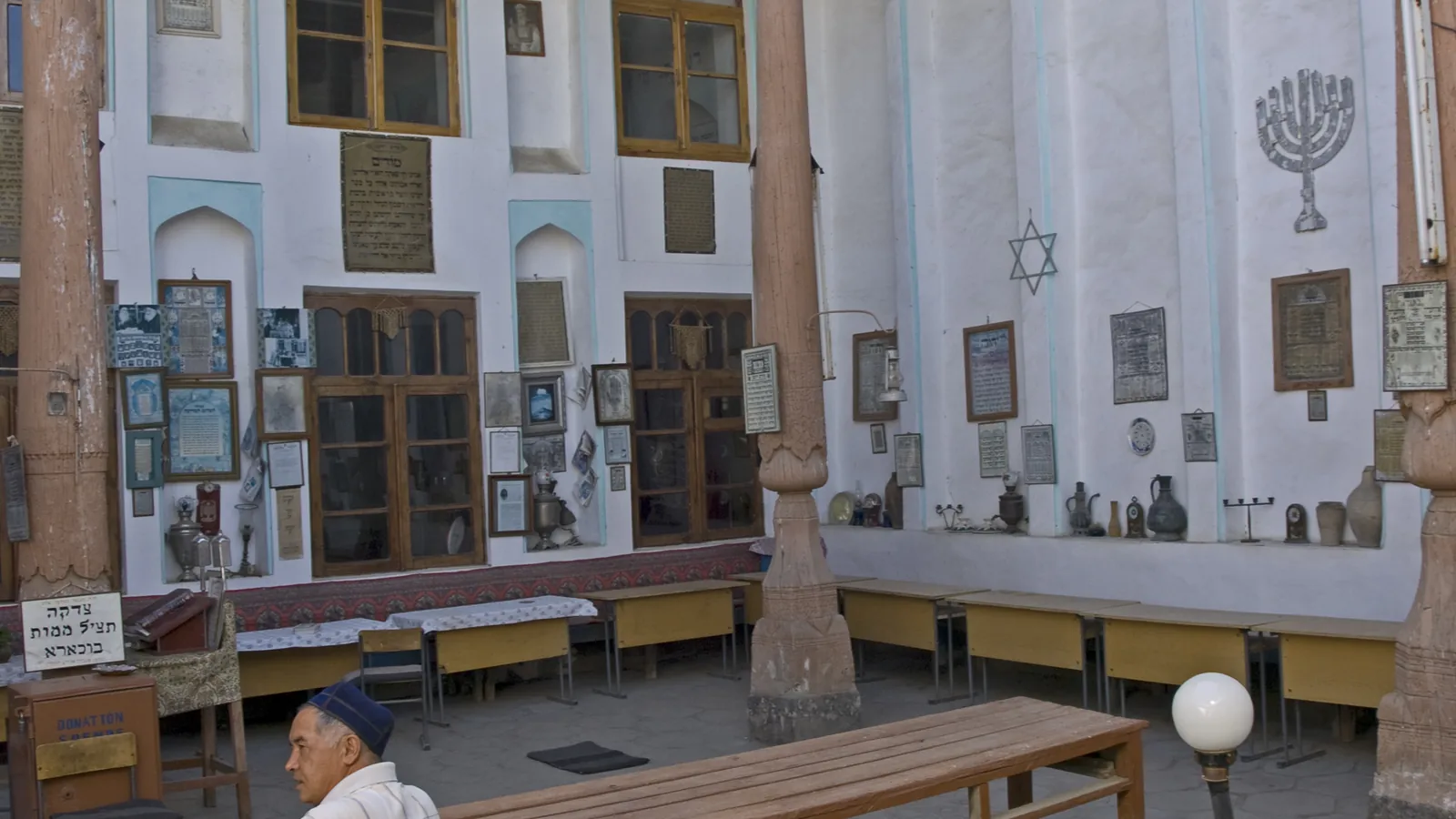
The synagogue sits within the lanes historically associated with Bukharan Jewish life. Its modest courtyard and prayer spaces tell a community history that is essential to understanding the city’s cultural diversity.
How to read the place
Visit to see a different strand of Bukhara’s Silk Road identity and living religious heritage. The place is easier to understand alongside Lyabi-Hauz, Magoki Attori Mosque, Fayzulla Khodjaev House Museum.
Why it matters today
Visit to see a different strand of Bukhara’s Silk Road identity and living religious heritage. Its significance comes from the relationship between the surviving place, its setting and the people who continue to use or interpret it.
What to notice
Look for courtyard prayer spaces, community history, and jewish-quarter lanes. It is an active religious place
Why it matters
Visit to see a different strand of Bukhara’s Silk Road identity and living religious heritage.
Highlights
- Courtyard prayer spaces
- Community history
- Jewish-quarter lanes
Gallery
Practical notes
It is an active religious place; access may depend on community activity, so visit discreetly.
Suggested visit: 30–45 min.
Add this place to your Uzbekistan journey.
Save the places that interest you, arrange the order, then request transport directly in WhatsApp.