
The story
Historical context
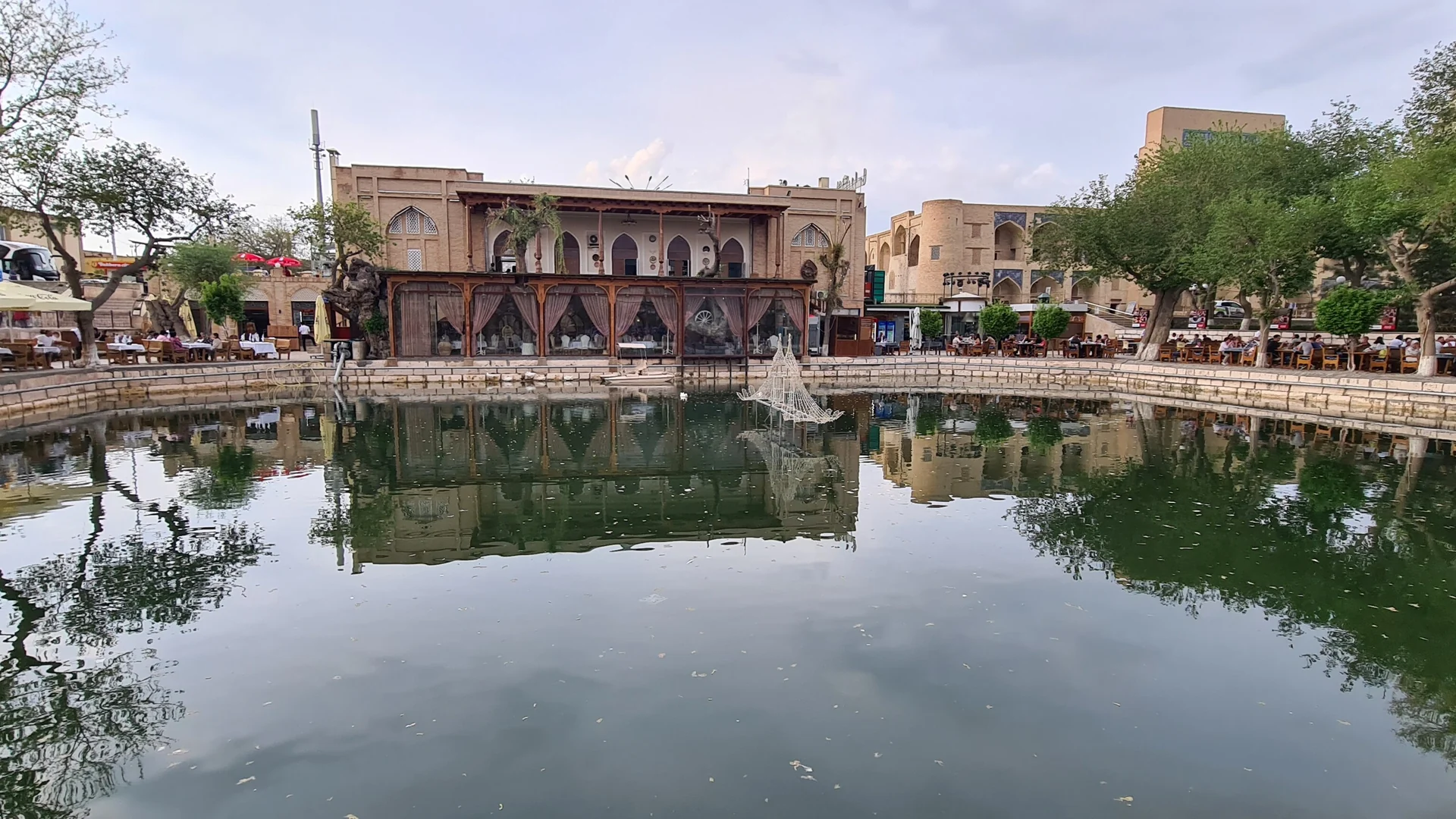
Lyabi-Hauz grew around one of the old city’s surviving ponds, historically part of Bukhara’s water landscape. Its name simply refers to the area “by the pool,” but the place became much more than a water source.
How to read the place
Kukeldash Madrasa and the buildings sponsored by Nadir Divan-Begi define the square. Their different functions—education, worship, lodging and trade—show how an urban ensemble could support both religious life and everyday exchange.
Place in the city and route
The pond remains a social focus today. Visit slowly, then step into the individual madrasa and khanaka pages to distinguish the historic components from the modern cafés and evening atmosphere.
Before you visit
The pond gives the ensemble its name and still organizes the public space. Kukeldash Madrasa represents an earlier phase; the Nadir Divan-Begi madrasa and khanaka frame the seventeenth-century transformation of the square.
Practical context
Its importance is both architectural and social. The monuments establish the historic edges, while shade, water and pedestrian life explain why the place remains one of Bukhara’s most legible public rooms.
Why it matters
It is a place to pause, watch the city and feel how heritage remains part of daily Bukhara.
Highlights
- Historic pond
- Nadir Divan-Begi ensemble
- Evening atmosphere
Gallery
Practical notes
Return in a different light if your schedule allows; the mood changes from morning to evening.
Suggested visit: 45–75 min.
Add this place to your Uzbekistan journey.
Save the places that interest you, arrange the order, then request transport directly in WhatsApp.