
The story
A late traditional foundation
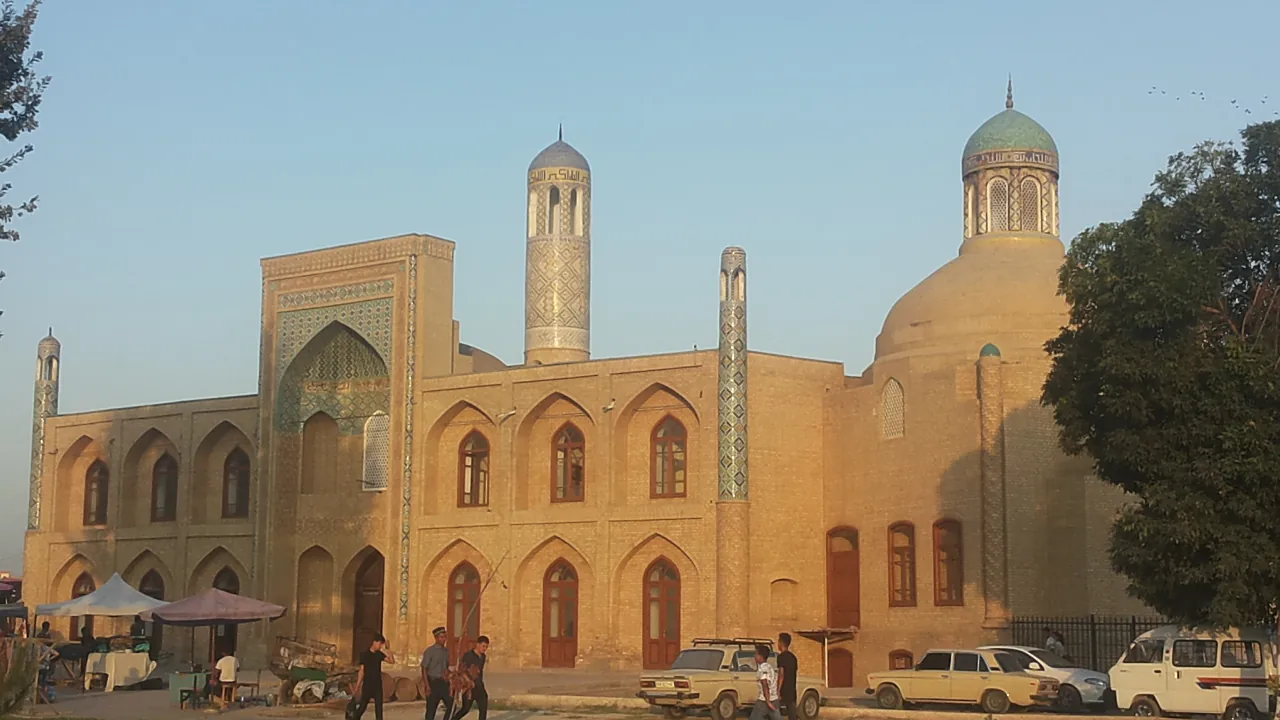
The madrasa belongs to the early twentieth century, when traditional religious architecture continued alongside rapid political and social change. Its name links the foundation with Mulla Kyrgyz, while the building reflects Namangan craft traditions.
Architecture
Courtyard planning, hujra cells, carved timber and decorative masonry show how established madrasa forms were adapted in the Fergana Valley. Surviving and restored elements should be distinguished where conservation is visible.
Twentieth-century change
Religious institutions across the region experienced closures, reuse and restoration during the Soviet and post-Soviet periods. Present appearance therefore reflects both original design and later interventions.
Place in Namangan
Visit it with Khoja Amin Mausoleum to compare a madrasa with an earlier memorial complex and to understand that Namangan’s heritage is not limited to modern parks.
Why it matters
The madrasa preserves an important late chapter of traditional architectural education in Namangan.
Highlights
- A late traditional foundation
- Architecture
- Twentieth-century change
Gallery
Practical notes
Respect any current institutional or religious use and confirm access locally. Look closely at timber and brick details rather than relying only on the courtyard overview.
Suggested visit: 40 min.
Add this place to your Uzbekistan journey.
Save the places that interest you, arrange the order, then request transport directly in WhatsApp.