
The story
Dynastic memory
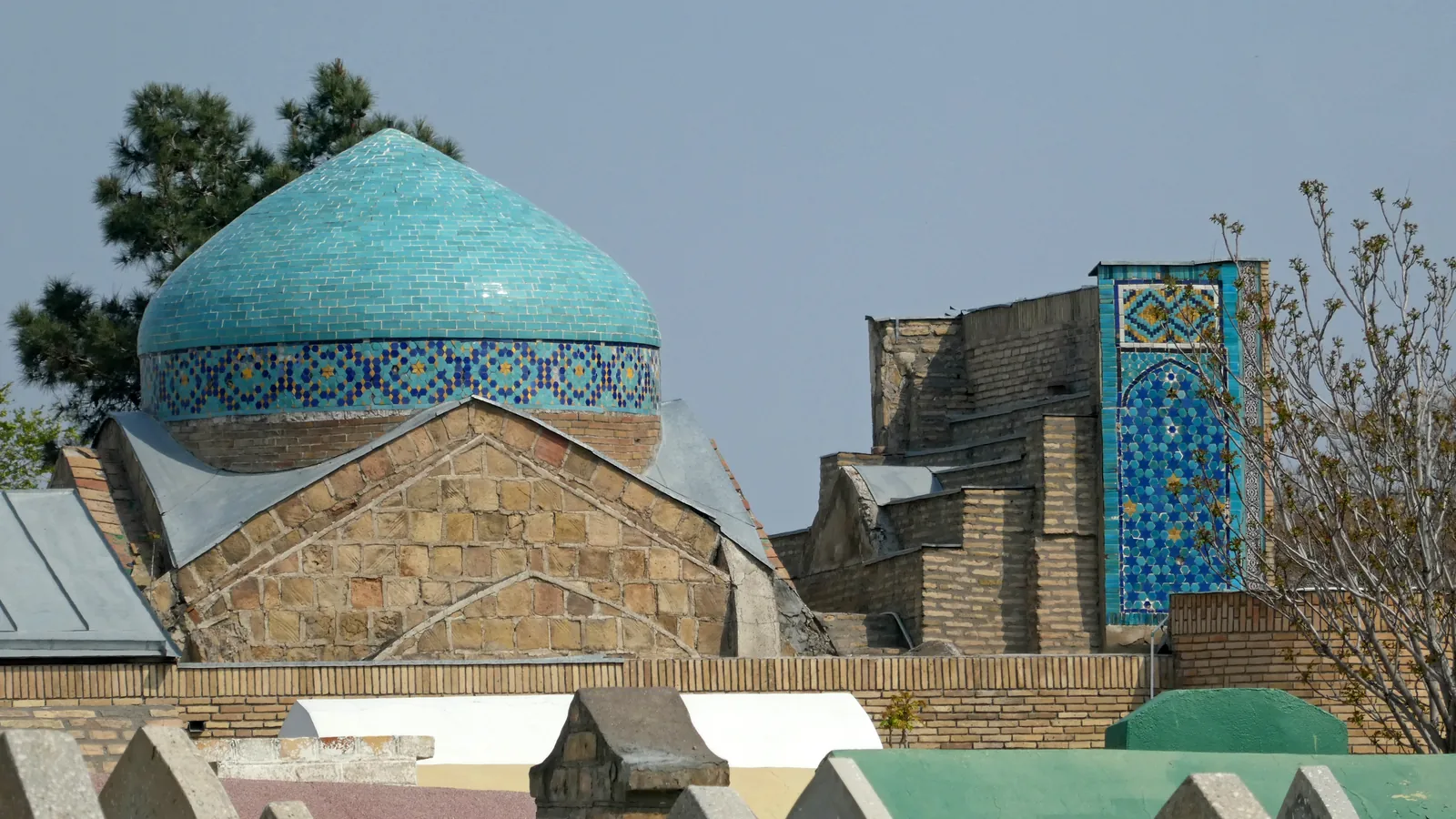
Dakhma-i-Shahon developed as a burial place for members of Kokand’s ruling house. The ensemble is strongly associated with Mohlaroyim, better known as Nodira, the poet and consort of Umar Khan who played an important cultural and political role after his death.
Architecture and inscriptions
The entrance, carved wood, glazed decoration and inscribed surfaces frame a memorial landscape rather than a single freestanding tomb. Poetry, Qur’anic text and vegetal ornament connect dynastic memory with religious expression.
History and caution
Individual burial attributions and construction phases are not always equally documented. The site is best described as the khans’ dynastic cemetery while treating popular stories about specific graves with appropriate caution.
Related monuments
The nearby Modari Khan Mausoleum belongs to the same wider field of royal commemoration but retains its own historical identity and page.
Why it matters
The cemetery brings the political history of the khanate into contact with Nodira’s literary legacy and Fergana memorial architecture.
Highlights
- Dynastic memory
- Architecture and inscriptions
- History and caution
Gallery
Practical notes
Keep voices low and treat graves and devotional activity respectfully. Visit with Modari Khan Mausoleum and Norbutabiy Madrasa for a connected historical reading.
Suggested visit: 35 min.
Add this place to your Uzbekistan journey.
Save the places that interest you, arrange the order, then request transport directly in WhatsApp.