
The story
Historical context
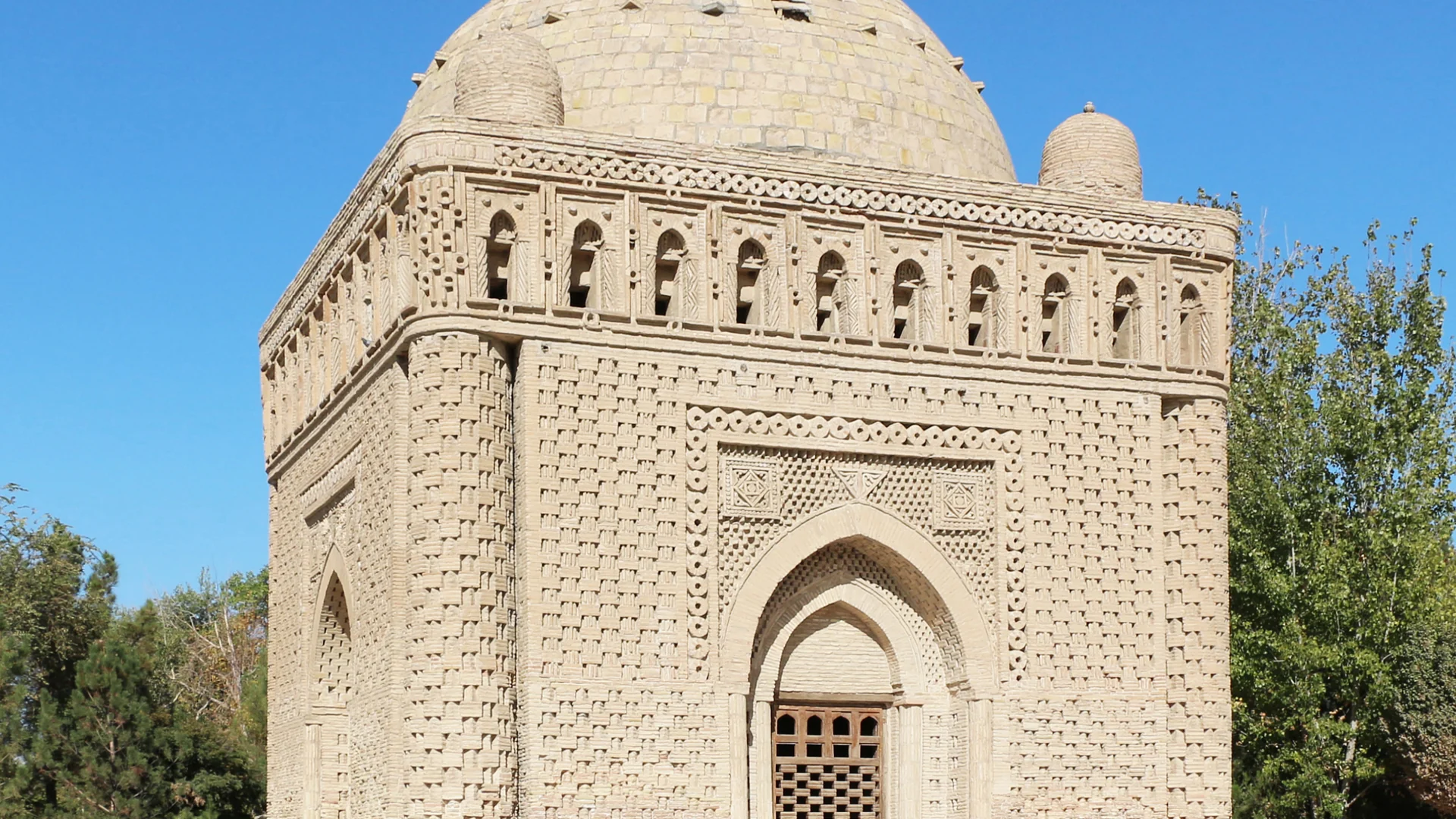
The Samanid Mausoleum is generally dated to the late ninth or early tenth century and is one of Central Asia’s most important surviving early Islamic buildings. Its compact cube and dome are built almost entirely through patterned brickwork.
How to read the place
The monument is associated with the Samanid dynasty, whose rule made Bukhara a major centre of politics and learning. The building’s structure and decoration are inseparable: brick creates walls, arches, light and ornament at once.
Place in the city and route
Its survival gives visitors a rare physical connection to Bukhara before the better-known Timurid and Shaybanid monuments. The mausoleum stands within the UNESCO-listed Historic Centre, rather than holding a separate individual inscription.
Before you visit
The compact cube and dome rely on fired brick for both structure and ornament. Changing the direction and depth of the brickwork creates patterns that shift with the sun without depending on applied tile decoration.
Practical context
Its survival gives the monument unusual weight in the history of Central Asian architecture. It should be read at walking pace: first as a balanced volume, then close enough to see how each brick participates in the design.
Why it matters
Come close to see how simple brick becomes intricate geometry.
Highlights
- Brick lattice patterns
- Balanced cube-and-dome form
- Changing shadows
Gallery
Practical notes
Soft morning or late-day light makes the brickwork especially legible.
Suggested visit: 25–40 min.
Add this place to your Uzbekistan journey.
Save the places that interest you, arrange the order, then request transport directly in WhatsApp.