
The story
Historical context
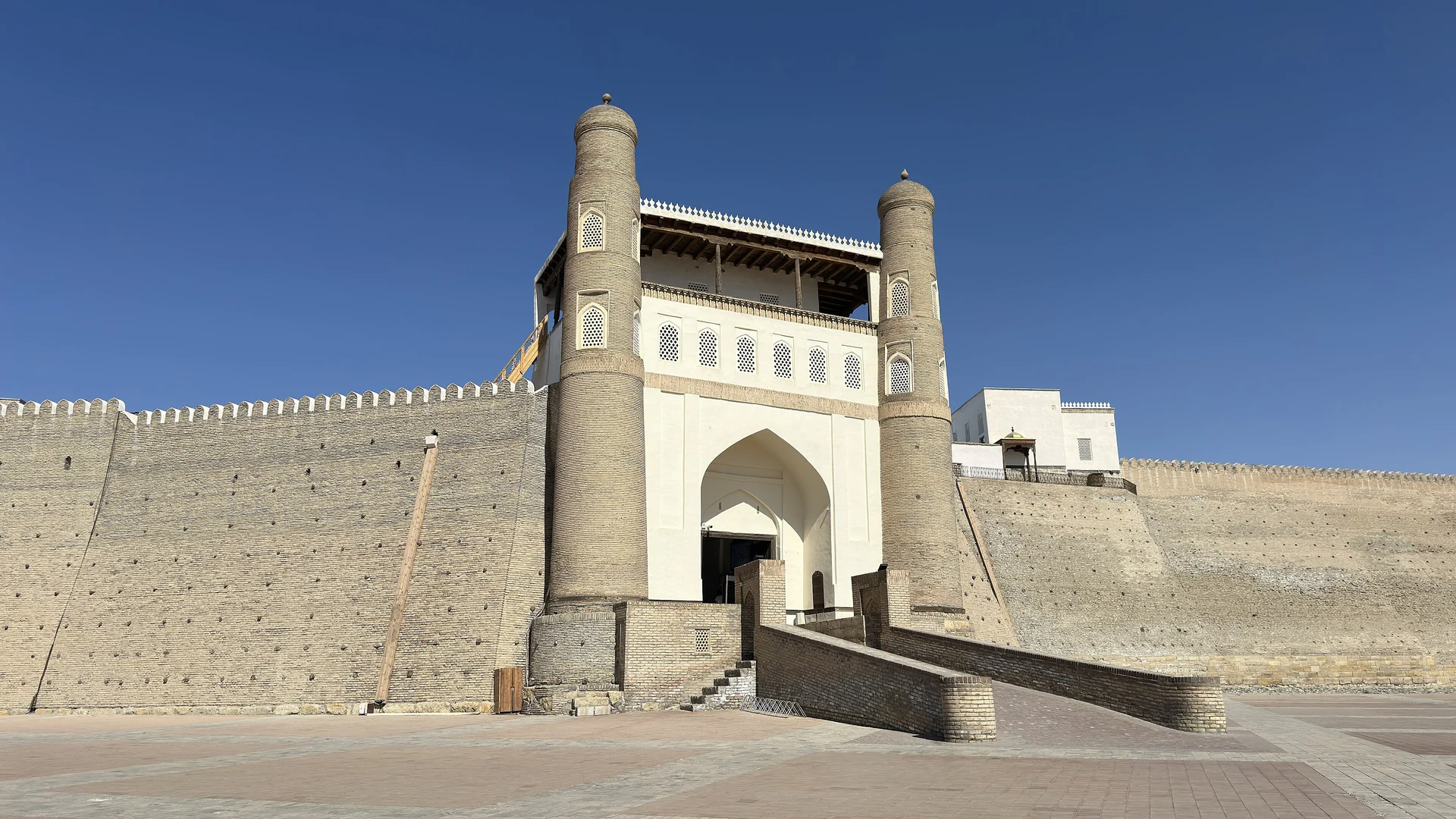
The Ark is Bukhara’s ancient citadel and for centuries served as a seat of rulers, administration and court life. Its massive sloping walls create a city-within-a-city impression even though only part of the former complex survives.
How to read the place
The buildings visible today reflect repeated rebuilding, damage and restoration rather than one untouched period. Gates, courtyards and museum rooms help explain how political power operated alongside ceremonial and domestic spaces.
Place in the city and route
The Ark also frames the final chapter of the Bukhara Emirate. Visiting it together with Bolo Hauz, the former zindan and the nearby water tower gives a fuller picture of the city beyond palace architecture alone.
Before you visit
The Ark was not merely a palace building but a fortified seat of government with courts, service areas and ceremonial spaces. Its present fabric reflects repeated rebuilding, damage and restoration rather than a single untouched phase.
Practical context
The elevated walls and surviving interiors help explain the relationship between political authority and the commercial-religious city outside. Pairing the Ark with Bolo Hauz and the former water tower makes that urban relationship easier to read.
Why it matters
Walking through the gateway changes the scale of the visit—from street-level Bukhara to the viewpoint of its rulers.
Highlights
- Fortified gateway
- Citadel walls
- Old-city views
Gallery
Practical notes
Surfaces and ramps can be uneven; comfortable footwear is useful.
Suggested visit: 60–90 min.
Add this place to your Uzbekistan journey.
Save the places that interest you, arrange the order, then request transport directly in WhatsApp.