
The story
A royal roadside complex
Rabati Malik began in the eleventh century as a fortified residence associated with Karakhanid rulers. Its position on a major route later supported use as a caravanserai.
The surviving portal
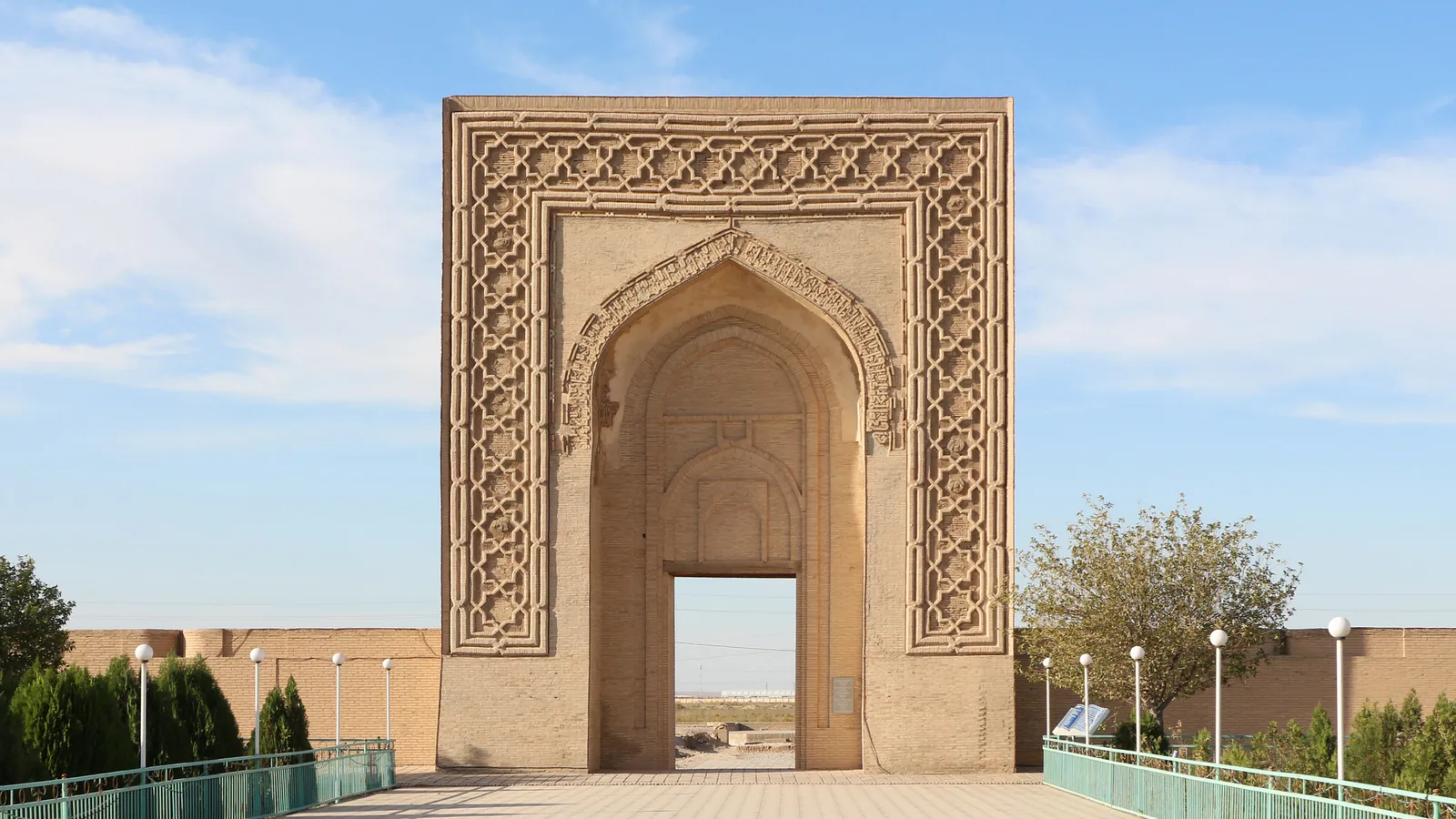
The tall brick portal is the most visible remnant. Its patterned masonry and scale preserve evidence of a much larger complex known through archaeology and historical drawings.
World Heritage corridor
Rabati Malik Caravanserai and its nearby sardoba are component parts of the UNESCO World Heritage property Silk Roads: Zarafshan-Karakum Corridor, inscribed in 2023.
One road, two places
The caravanserai and sardoba remain independently searchable, but My Trip groups them as one practical stop. Cross the modern road only with care and follow current site access.
Why it matters
The site makes the infrastructure of long-distance Silk Road travel tangible through architecture, archaeology and its paired water system.
Highlights
- Karakhanid portal
- Silk Road archaeology
- UNESCO corridor
Gallery
Practical notes
The monuments sit beside a modern highway. Use designated access, supervise children and do not assume the road can be crossed safely at any point.
Suggested visit: 45–60 min.
Add this place to your Uzbekistan journey.
Save the places that interest you, arrange the order, then request transport directly in WhatsApp.